
 About Us
 News
 Store Locator
 Support
Characteristics of Mê Gạo Glutinous Rice, 100% Pure Glutinous Rice

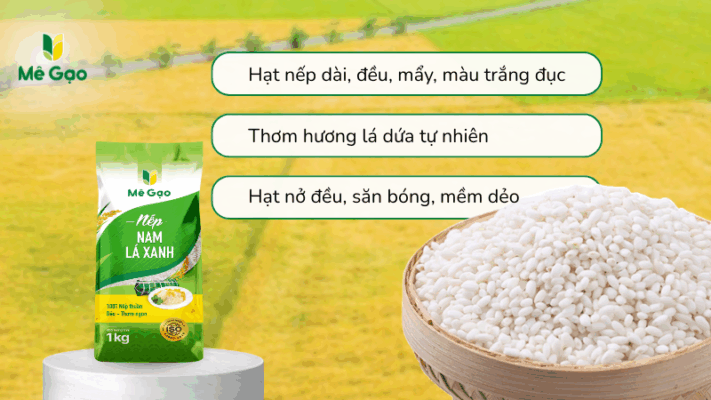
Glutinous Rice is 100% pure glutinous rice, highly valued for its long, perfectly uniform grains and distinctive opaque white color. It stands out for its natural pandan aroma and perfect soft, tender texture that does not turn mushy when cooked. Notably, Glutinous Rice from Mê Gạo is packaged on a modern production line and meets international safety standards such as FDA, HALAL, HACCP and ISO 22000:2018.
Origin and growing region of Glutinous Rice
Mê Gạo Glutinous Rice is grown in the Mekong Delta, a key agricultural region with a river ecosystem and nutrient-rich alluvial soil. The natural conditions here help the glutinous rice plants grow evenly, accumulate nutrients and develop their distinctive pandan aroma.
- The cultivation and harvesting of Glutinous Rice are strictly controlled at every stage. From seed selection and sowing to crop care and harvesting, the entire process aims to preserve the purebred characteristics of the glutinous rice variety. As a result, the harvested grains are plump, contain few impurities and keep their uniformly long, opaque white structure.
- After harvesting, the glutinous rice is processed and packaged on a modern production line to control moisture and limit exposure to the outside environment.
Sensory characteristics: How to recognize genuine Glutinous Rice
To know how to identify 100% pure Glutinous Rice and avoid buying blended products, consumers can rely on the following basic characteristics:
1. Grain shape and color
Glutinous Rice is known for its long, opaque white grains of uniform size. When you hold them in your hand, the grains feel firm and are not broken or crumbled.
2. Natural aroma of the uncooked grains
Even before cooking, the grains have a gentle pandan aroma. When you bite into one, it is crunchy and leaves a light sweet aftertaste.
3. Quality when cooked
After steaming or cooking, the grains expand evenly and look glossy. The texture is moderately soft and tender, not mushy or clumped together. The grains keep their shape and do not break apart during cooking.
4. Softness and tenderness when cooled
A standout feature of Mê Gạo Glutinous Rice is its ability to stay tender after cooling. The grains remain soft without drying out, hardening or losing their texture. This helps dishes keep their quality for a long time, making it especially suitable for traditional sticky rice dishes and cakes.
What dishes is Mê Gạo Glutinous Rice suitable for?
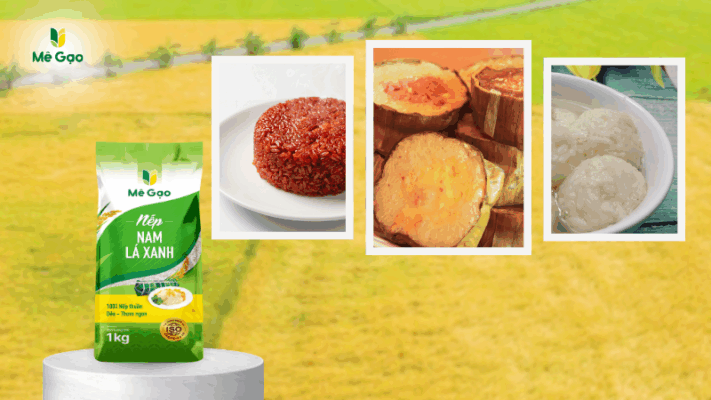
Thanks to its long grains, perfect soft and tender texture and natural pandan aroma, Glutinous Rice can be used flexibly in many cooking methods. From traditional dishes to modern variations, this glutinous rice consistently delivers noticeably high-quality results.
Sticky rice (steamed sticky rice)
Glutinous Rice is a great choice for sticky rice dishes such as savory sticky rice, chicken sticky rice, gac fruit sticky rice or pandan sticky rice. When steamed, the grains expand evenly, have a glossy surface and stick together well. The finished dish is soft and tender, not gummy or mushy, and keeps its natural color when combined with ingredients like gac fruit or pandan leaves.
Traditional cakes
This glutinous rice is often used to wrap square sticky rice cakes (banh chung) and cylindrical sticky rice cakes (banh tet) because it stays tender for a long time. After cooking, the grains bind firmly together, creating a soft, tender cake that does not dry out or harden during storage.
In addition, when ground into glutinous rice flour, it makes cake doughs that are soft and tender, crack less and retain moisture well.
Fermented glutinous rice (com ruou)
During fermentation, the grains keep their shape and do not break apart. The finished fermented glutinous rice is naturally sweet, soft and has balanced moisture.
Glutinous rice sweet soup (che)
When used for sweet soup, Glutinous Rice produces soft, tender grains that keep their shape. Combined with coconut milk or beans, the sweet soup has a smooth, thick consistency and natural sweetness.
Frequently Asked Questions (FAQ)
Can the Nam La Xanh glutinous rice variety tolerate acid sulfate and saline soils?
The Nam La Xanh glutinous rice variety grows vigorously and adapts well to certain specific soil conditions. In farming areas of the Mekong Delta, the rice plants can tolerate mild acid sulfate and saline conditions, ensuring stable yields while still producing tender, fragrant, plump grains at harvest.
Does Mê Gạo Glutinous Rice need to be soaked before cooking?
For the best results, soak the glutinous rice for 4 – 6 hours before cooking. Soaking helps the grains absorb water evenly, shortens the cooking time and makes the finished dish more tender.





