
 About Us
 News
 Store Locator
 Support
Does Japonica Rice Make You Gain Weight? Science-Based Eating Rules

Japonica Rice is a round-grain, sticky rice that originated in Japan and is widely used in dishes such as plain steamed rice, sushi and bento boxes. Because it has a sticky texture, a light sweetness and is easy to eat, many people worry that eating it regularly may cause weight gain. In fact, eating Japonica Rice does not directly make you gain weight. Weight gain happens when your total calorie intake is higher than the calories your body burns in a day.
This means that with the same food, if you eat the right portions and combine it properly with other food groups, you can still maintain a stable weight. In this article, Mê Gạo analyzes the calorie content in detail and guides you through science-based rules for eating Japonica rice so you can enjoy delicious meals while staying in shape.
Nutritional value: How many calories are in 100g of Japonica Rice?
Calorie content is the deciding factor in whether a food affects your weight. 100g of Japonica Rice provides:
| Component | Amount |
| Energy | ≥ 347 kcal |
| Carbohydrate | ≥ 77.3 g |
| Protein | ≥ 8.0 g |
| Fat | ≥ 0.6 g |
| Sodium | ≥ 2.9 mg |
Does eating Japonica Rice make you fat?
Eating Japonica Rice will not make you fat if you control your daily calorie intake. Weight gain is not about the type of rice alone; it depends on the total energy you consume compared with the energy your body uses.
The rule that determines weight gain
- If Calorie In > Calorie Out -> the body stores excess energy as fat
- If Calorie In ≤ Calorie Out -> your weight is maintained or decreases
So even if you eat Japonica Rice every day, you will not gain weight as long as you eat the right portions.
Why should you eat Japonica Rice?
- Keeps you full longer: The sticky texture of the rice makes you chew more slowly. When a meal lasts longer, your brain has enough time to receive fullness signals, reducing the risk of overeating.
- Steady starch absorption: The starch in Japonica Rice is digested at a moderate rate, helping limit sudden blood sugar spikes – a factor linked to fat storage.
- Easy to digest and gentle on the digestive system: Soft, sticky rice is easier for the body to absorb, especially when eaten properly and chewed thoroughly.
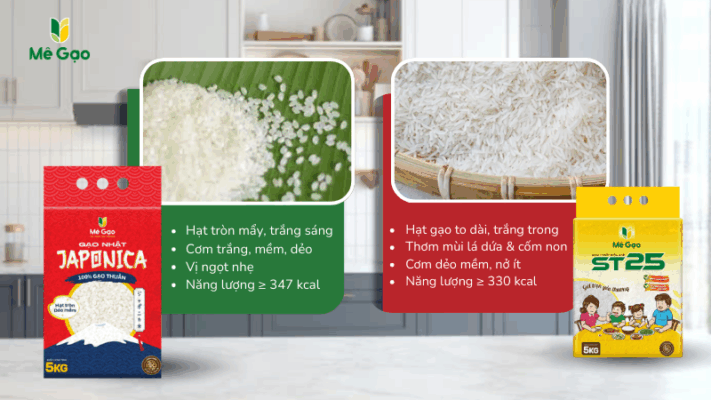
Comparing the characteristics & nutrition of Japonica Rice and ST25 Rice
| Criteria | Japonica Rice | ST25 Rice |
| Grain characteristics | Short, round, plump and uniform grains, few broken grains, bright white rice. | Long and slender, translucent white, no chalkiness, beautifully whole grains. |
| Flavor | White, soft and very sticky rice with a slight chewiness, a distinctive aroma and a mild sweetness. | Natural aroma like pandan leaves blended with young green-rice flakes, fragrant even before cooking. |
| Cooked texture | The rice stays soft and delicious even when cooled. | When cooked, the grains are soft and tender, expand only slightly, and are fragrant and delicious with a mild sweetness. |
| Energy | ≥ 347 kcal | ≥ 330 kcal |
| Carbohydrate | ≥ 77.3 g | ≥ 78.5g |
| Protein | ≥ 8.0 g | ≥ 7.0g |
Rules for eating Japonica rice properly when losing weight
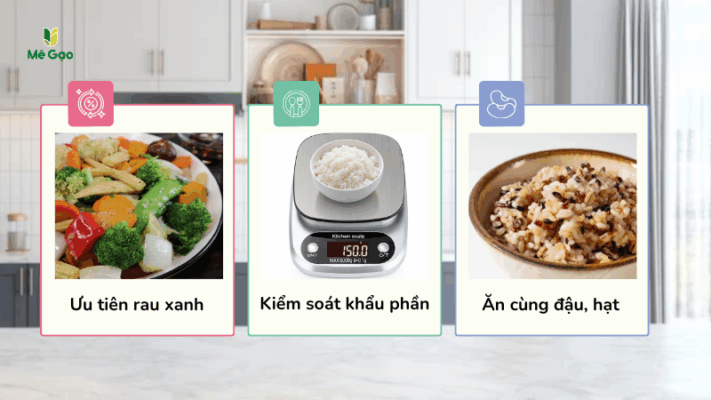
Eating Japonica Rice can still support weight loss if you follow the right rules for calorie control, eating order and food pairing. Here are the rules that let you enjoy delicious rice without worrying about weight gain:
1. Eat green vegetables before rice
Start your meal with a plate of green vegetables (boiled, steamed or in a salad). The fiber from vegetables forms a lining in the stomach, slowing the absorption of sugar from starch into the blood. Only then should you move on to rice with protein-rich dishes.
2. Control your portion at each meal
No food will help you lose weight if you eat too much of it.
- Women: 1 bowl of rice (about 100g – 150g cooked) per meal.
- Men: 1.5 – 2 bowls of rice per meal (depending on activity level).
3. Combine with grains and legumes
To increase fiber and protein and reduce the proportion of pure starch, mix Japonica Rice with nutritious grains and legumes. Cook Japonica Rice with red beans, black beans, chickpeas or quinoa to boost both flavor and nutrition.
To make your journey to staying in shape as effective as possible, you can try these eat clean menus with Japonica Rice to add variety to your healthy meals every day.
Frequently Asked Questions (FAQ)
Japonica rice vs. brown rice: Which is better for weight loss?
In fact, brown rice is better for rapid weight loss because it contains more fiber and slightly fewer calories. However, brown rice is often dry and hard, which makes it difficult to stick with long term. Japonica Rice is the perfect solution for staying in shape sustainably, letting you enjoy tasty meals while still controlling your weight if you follow the rules on portion control and eating order.
Is Japonica Rice grown in Vietnam as good as imported Japanese rice?
It is completely equivalent in nutritional value. Japonica Rice grown in Vietnam (especially in certified growing areas) uses purebred Japanese varieties. The biggest advantage of domestic rice from reputable brands is its freshness and continuous harvests, as it does not go through the long shipping and storage process that imported rice does, so it fully retains the thin bran layer rich in B vitamins.





