
 About Us
 News
 Store Locator
 Support
How to Cook Japonica Rice Porridge for Baby Food: Tips for Smooth, Creamy and Delicious Porridge

The weaning stage is an important transition as your baby begins to get used to foods other than milk. During this time, choosing the right ingredients not only helps your baby absorb nutrients better but also supports the steady development of the digestive system.
Among the types of rice used for porridge, Japonica Rice is a favorite of many mothers thanks to its round, soft and sticky grains that easily cook into smooth, creamy porridge. When cooked properly, porridge made from Japanese Japonica Rice has a naturally smooth texture, a light sweetness and is very easy for babies who are just starting solids to eat. The article below gives a detailed guide to cooking smooth, delicious Japonica rice porridge that retains all its nutrients for your little one.
Why should mothers choose Japonica Rice for baby food?
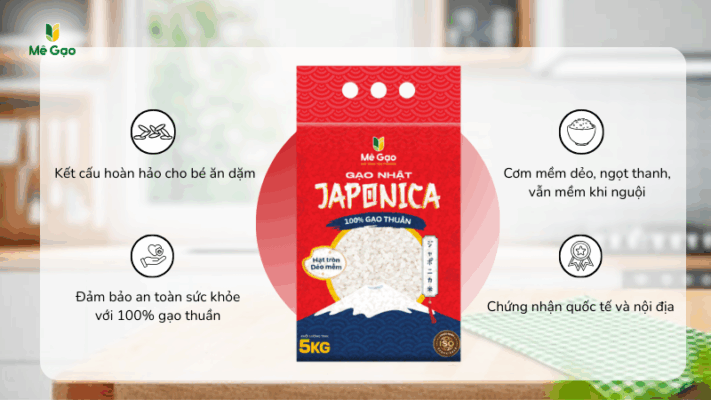
When your baby starts eating solids, choosing the right rice plays an important role in helping them get used to new foods. Japonica Rice is highly regarded for being soft, sticky and easy to digest, making it very suitable for a baby’s immature digestive system.
1. A soft texture that is easy for babies to eat and swallow
- Japonica Rice cooks into porridge with a natural creaminess that makes it easier for babies to swallow.
- The cooked grains expand evenly and become soft, reducing lumps in the porridge.
- Japonica rice porridge keeps a slight cohesiveness, helping your baby get used to thicker foods naturally.
2. A mild flavor that helps babies get used to food
- Japonica Rice has a natural sweetness that lets your baby taste food without any seasoning.
- The porridge has a light aroma that doesn’t overstimulate the taste buds.
- Babies usually accept porridge with a mild, consistent flavor more easily.
3. Easily digestible starch supports an immature digestive system
- The starch in Japonica Rice has a soft structure that your baby’s body can digest more quickly.
- Porridge made from Japanese Japonica Rice eases the burden on a baby’s still-delicate stomach, reducing the risk of bloating or indigestion.
4. Clean rice ensures your baby’s safety
- Japonica Rice that meets quality standards gives mothers peace of mind for long-term use.
- A well-controlled production process helps limit impurities and unwanted residues.
- The Japonica Rice holds reputable certifications such as FDA, HALAL, HACCP and ISO 22000:2018.
5. Suitable for many different baby food dishes
- Japonica Rice can be used to cook thin or thick porridge depending on your baby’s stage.
- You can combine the rice with meat, fish and vegetables to vary the menu.
- Its sticky texture helps dishes stay delicious even when cooled.
Notes when cooking porridge with Japonica Rice
To make the most of the rice’s nutritional value and its tender, fragrant qualities, keep the following basic preparation techniques in mind.
Do you need to rinse it thoroughly?
Mê Gạo rice has round, plump, uniform grains with few broken ones and a bright white color. Because the rice has already been cleaned and meets quality standards, you should not rinse it too thoroughly. Scrubbing it vigorously can remove the outer bran layer, which contains large amounts of B vitamins (especially B1) that are very good for the development of a child’s nervous system. Simply rinse it gently with clean water 1 to 2 times to remove dust.
Soaking time
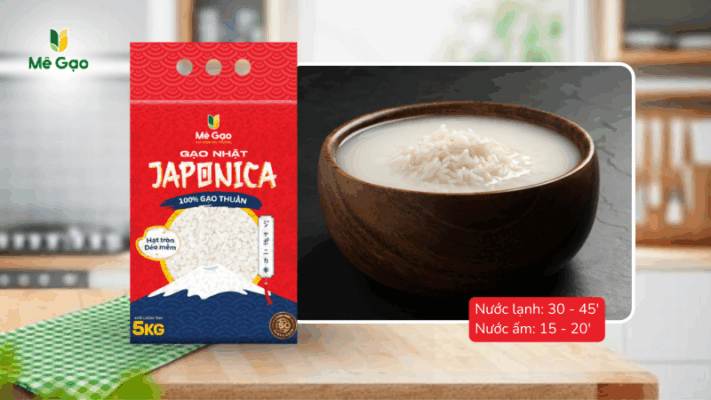
For porridge that cooks quickly and becomes as smooth and creamy as possible, soak the rice before cooking. The ideal soaking time is 30 to 45 minutes in cold water, or 15 – 20 minutes in warm water. Soaking helps the grains absorb enough water so that they burst open evenly when simmered, with a soft, tender texture that isn’t mushy, while keeping their natural mild sweetness.
3 simple, time-saving ways to cook Japonica rice porridge
Depending on your circumstances, you can use 1 of the 3 best methods below to cook porridge for your baby.
Method 1: Cook in a slow cooker
- Preparation: Put the soaked Japonica Rice into the ceramic pot of the slow cooker.
- Water ratio: Usually, the rice-to-water ratio for babies just starting solids is 1:10 (1 part rice, 10 parts water). As your baby grows, you can reduce the ratio to 1:7 or 1:5 depending on the desired thickness.
- Cooking: Select the “Slow cook” or “Porridge” mode and let the cooker run for about 2 – 3 hours.
- Result: The porridge cooks slowly until very soft, the grains become thick and creamy, the liquid is sweet and nothing boils over.
Method 2: Cook in a rice cooker
- Preparation: Add rice and water to the rice cooker at a ratio suited to your baby’s age in months. You can add 1 teaspoon of baby cooking oil (olive oil) to keep the porridge from boiling over.
- Cooking: Press the “Cook” button. When the cooker switches to “Warm” mode, open the lid and stir gently. Let it sit for about another 30 minutes so the grains continue to absorb water and burst open.
- Note: If your rice cooker has a “Porridge” mode, use it so the cooker automatically adjusts to the ideal temperature.
Method 3: Cook on a gas/induction stove and keep warm in a thermal flask
This method saves a great deal of fuel and is ideal when you need to prepare porridge for your baby to take out.
- Cooking: Put rice and water in a pot and cook it on a gas or induction stove. When the porridge comes to a rolling boil, stir well so the rice doesn’t stick to the bottom of the pot.
- Keeping warm: Lower the heat and cook for about 5 more minutes, then pour all of the boiling porridge into a thermal flask (a wide-mouth type).
- Resting time: Close the lid tightly and leave it overnight (or for at least 3-4 hours). The heat trapped inside will soften the grains on its own. The next morning, simply take out the porridge, reheat it and add meat and vegetables for a complete meal for your baby.
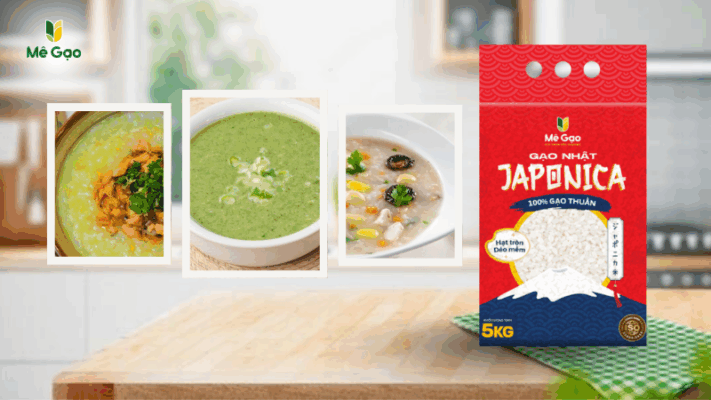
3 Japonica Rice baby food menus to help your baby gain weight
Below are recipes that combine nutritious foods with Japonica Rice to help your baby gain weight steadily and develop fully.
Japonica rice porridge with salmon + pumpkin
- Ingredients: 30g Japonica Rice, 20g salmon fillet, 20g pumpkin, 1 teaspoon olive oil, a few slices of ginger.
- Instructions:
- Steam the salmon with a few slices of ginger to remove the fishy smell, then carefully remove all the bones and flake or mash it.
- Peel the pumpkin and dice it, or steam it and mash it until smooth.
- Cook the Japonica rice porridge until very soft. When the porridge is creamy, add the salmon and pumpkin, stir well and simmer for about 3 minutes.
- Turn off the heat, add 1 teaspoon of olive oil, let it cool slightly and serve it to your baby.
- Benefits: Salmon is rich in omega-3s for brain development, while pumpkin provides vitamin A for healthy eyes.
Japonica rice porridge with beef + katuk leaves
- Ingredients: 30g Japonica Rice, 20g beef tenderloin, 15g young katuk leaves (rau ngot), baby cooking oil.
- Instructions:
- Wash the beef and mince or grind it finely. To keep the beef from clumping, you can mix it with a little cold water before cooking.
- Wash the katuk leaves, crush them and chop them very finely.
- Cook the Japonica rice porridge until soft and sticky. Add the beef and then the katuk leaves to the pot, stirring well.
- Cook for another 3-5 minutes until the meat and leaves are fully cooked. Turn off the heat and add the baby cooking oil.
- Benefits: Provides plenty of iron from the beef and fiber from the katuk leaves, helping prevent anemia and supporting digestion.
Japonica rice porridge with lotus seeds + oats
- Ingredients: 25g Japonica Rice, 10g rolled oats, 15g fresh lotus seeds (germ removed).
- Instructions:
- Wash the lotus seeds, boil or steam them until soft, then mash them with a spoon.
- Soak the oats in water for about 10 minutes until soft.
- Simmer the Japonica rice porridge. When it is almost done, add the mashed lotus seeds and oats and cook them together. Stir well for about 5 minutes so the ingredients blend and the porridge becomes smooth and creamy.
- Benefits: Lotus seeds have a calming effect that helps your baby sleep soundly, and combined with oats, which are rich in soluble fiber, they are extremely good for a baby’s delicate gut.
Tips for fixing porridge that is too thick or too thin
When cooking, you may sometimes misjudge the amount of water and end up with porridge that isn’t the consistency you want. Try these fixes right away:
- When the porridge is too thick: Don’t pour cold water directly into boiling porridge, as this will make it separate and lose its sweetness. Instead, boil some filtered water (or vegetable broth), slowly add it to the porridge and stir well with a ladle over low heat until the porridge reaches the consistency you want.
- When the porridge is too thin: Take the lid off and keep cooking over low heat for a while to let some of the water evaporate. For a quick fix, mix a small spoonful of rice flour or tapioca starch with a little cold water, then slowly pour it into the porridge while stirring well. The porridge will thicken quickly.
Where can you buy Japonica Rice from a trusted source?
For our customers’ convenience, Mê Gạo’s distribution network is available at reputable retail outlets nationwide. You can easily buy the genuine product through the following channels:
- Major reputable supermarket chains
Consumers can easily buy the product directly from our official distribution partners in each region:
-
In Hanoi: The product is available at Tmart and HomeFarm stores, so mothers can buy Japonica Rice in Hanoi with confidence in its verified quality.
-
In Ho Chi Minh City: Customers who want to buy Japonica Rice in Ho Chi Minh City can visit KingFoodMart supermarkets directly.
- Mê Gạo’s official stores and distributors
To make sure you buy the genuine product and receive detailed advice, contact us directly via the hotline 0973 978 039 for support.
- Buying Japonica Rice on e-commerce platforms
Customers can find Mê Gạo‘s official stores on e-commerce platforms such as Shopee and TikTok Shop for convenient shopping and shipping offers.
Frequently Asked Questions (FAQ)
Does Japonica Rice need to be toasted before cooking?
In fact, you don’t have to toast Japonica Rice before cooking. However, if you want to change things up with porridge that has a light toasted aroma and grains that burst open and become fluffier, you can toast the rice over low heat before adding water and simmering.
Can a constipated baby eat Japonica Rice?
Absolutely. Because it cooks up soft, tender, lightly fragrant and mildly sweet, Japonica Rice is very easy for a baby’s stomach to process. For a baby with constipation, cook the porridge thinner than usual and add plenty of fiber-rich vegetables (such as sweet potato, pumpkin and Malabar spinach) to the porridge to support bowel movements.





