 About Us
 News
 Store Locator
 Support
How to Make Korean Mixed Rice (Bibimbap) at Home: Delicious, Authentic, and Simple

Korean mixed rice (Bibimbap) is a dish that perfectly combines the stickiness of the rice grains, the rich flavor of beef, the freshness of vegetables, and a hint of spicy heat from the sauce. To make delicious, authentic mixed rice at home, the most important secret is choosing the right rice and mixing the sauce in the right proportions.
This article will guide you through making delicious, authentic Korean mixed rice at home.
Ingredients for Mixed Rice
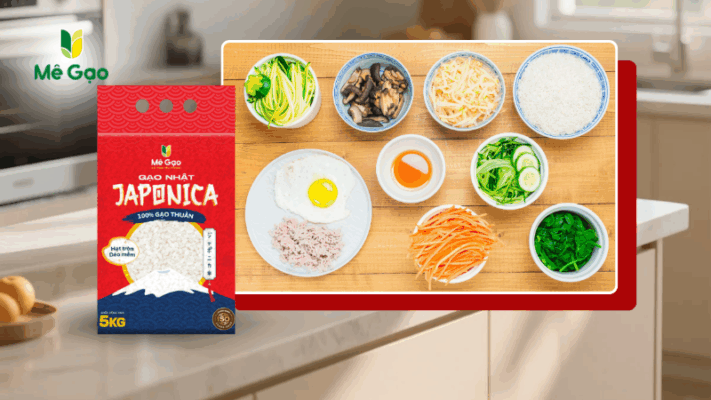
Preparing fresh, correct ingredients is the first step that determines the quality of Bibimbap. Below are the ingredient quantities for 2 servings:
- Rice: 200 g. (We recommend 100% Pure Japonica Rice from Mê Gạo. The grains are round and plump, and when cooked they are very sticky, soft, and cohesive, which helps the dish keep an authentic Korean texture and blend perfectly with the sauce.)
- Beef: 150 g (choose soft tenderloin).
- Eggs: 2.
- Vegetables: 100 g spinach, 1 small carrot, 1/2 zucchini, 50 g bean sprouts, 50 g fresh shiitake mushrooms, 50 g kimchi.
- Extra topping: Dried seaweed (to taste).
- Basic seasonings: Korean chili paste (Gochujang), Korean chili powder, soy sauce, rice vinegar (or apple cider vinegar), sesame oil, cooking oil, sugar, salt, ground pepper, minced garlic, roasted sesame seeds.
Korean Mixed Rice Sauce Ratio
The sauce is the soul of Bibimbap. An authentic Korean mixed rice sauce requires a balance of spicy, salty, and sweet flavors with the distinctive aroma of sesame oil.
Standard sauce recipe:
- 1 tablespoon Gochujang chili paste
- 1 tablespoon sugar
- 1 tablespoon rice vinegar
- 1 tablespoon sesame oil
- 2 tablespoons roasted sesame seeds
- 2 tablespoons filtered water
Method: Put all the seasonings above into a small bowl and stir well until the sugar dissolves completely and the mixture is smooth, thick, and uniform. You can adjust the amount of Gochujang to match your spice tolerance.
Simple Instructions for Making Korean Mixed Rice at Home
Making Bibimbap involves four basic steps: preparing and stir-frying the vegetables, marinating and stir-frying the beef, frying the eggs, and finally plating.
Step 1: Prepare and stir-fry the vegetables
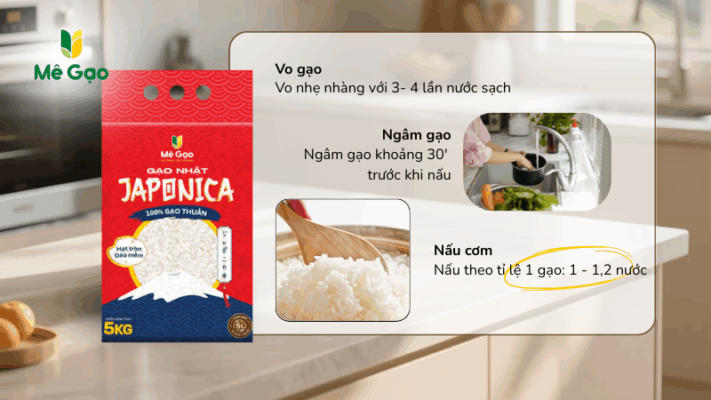
- Cook the rice: Rinse Mê Gạo Japonica Rice clean and cook it. Japonica Rice absorbs water well, so use exactly the water ratio printed on the package to get sticky rice that is not mushy.
- Prep: Peel the carrot and zucchini and cut them into thin strips. Slice the shiitake mushrooms thinly. Cut the spinach into bite-size pieces.
- Stir-fry the vegetables: Add a little cooking oil to a pan and stir-fry the carrot, zucchini, and shiitake mushrooms separately, each with a pinch of salt, until just cooked, then transfer to a plate.
- Dress the blanched vegetables: Blanch the spinach and bean sprouts in boiling water for about 1 minute. Lift them out and squeeze out the water, then toss thoroughly with 1 teaspoon of sesame oil and 1 teaspoon of soy sauce.
Step 2: Marinate and stir-fry the beef
- Wash the beef, pat it dry with a paper towel, and cut it into thin strips or thin slices.
- Marinate the beef in a mixture of 3 tablespoons of soy sauce, 1 tablespoon of sugar, 1 tablespoon of minced garlic, 1 tablespoon of rice vinegar, 1 tablespoon of sesame oil, and 1/2 teaspoon of pepper. Mix well and let it absorb the flavors for 15 minutes.
- Heat a pan and stir-fry the beef over high heat until it is just cooked and firm, then turn off the heat. Do not stir-fry for too long, to keep the beef from turning tough.
Step 3: Fry the eggs sunny-side up
- Heat a pan with a little cooking oil. Crack in the eggs and fry them sunny-side up.
- To keep to the Korean style, fry the eggs until just set and leave the yolk runny and rich, which adds binding and flavor when mixed into the rice.
Step 4: Plate and enjoy
- Put the hot rice (Mê Gạo Japonica Rice) into a large bowl. Smooth the surface of the rice.
- Arrange the stir-fried vegetables, kimchi, and beef around the rice in turn. Place the fried egg right in the center.
- Sprinkle on roasted sesame seeds and dried seaweed. When eating, drizzle on the prepared Gochujang sauce and mix thoroughly so the sauce coats every sticky grain of rice. Enjoy immediately while it is hot.
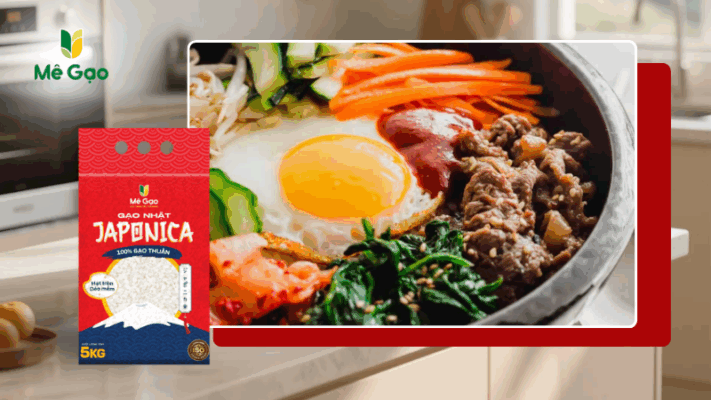
The Secret to Stone Bowl Bibimbap with a Crispy Scorched Rice Layer
Stone bowl Bibimbap (Dolsot Bibimbap) offers a more premium dining experience, thanks to the crispy scorched layer of rice at the bottom of the bowl and its ability to hold heat for a long time.
How to do it:
- Brush a thin, even layer of sesame oil over the entire inside surface of the stone bowl.
- Put the cooked rice into the bowl and gently press it down with a spoon against the bottom and sides of the bowl.
- Arrange the ingredients (vegetables, beef, egg) on top of the rice.
- Place the bowl on the stove and heat it over medium heat for about 5–10 minutes. When you hear a “sizzling” sound and smell the aroma of the scorched rice, turn off the heat and bring it out to enjoy.
Mixed Rice Variations for People on a Diet
If you are on a diet, you can easily swap ingredients to suit your needs.
- Eat Clean mixed rice: Replace white rice with brown rice to increase fiber. Swap the beef for pan-seared diced chicken breast. For the sauce, use reduced-sugar Gochujang chili paste, low-sodium soy sauce, and diet sweetener (stevia/erythritol) in place of white sugar.
- Vegetarian mixed rice: Remove all animal-based ingredients completely. Replace the beef with crispy fried tofu, stir-fried king oyster mushrooms, or vegetarian ham (cha lua). Do not use a fried egg; instead you can sprinkle on plenty of macadamia nuts or crushed cashews to add healthy fats and a nutty richness.
Frequently Asked Questions (FAQ)
How should I store leftover mixed rice?
To store mixed rice, do not mix the sauce into any rice you have not finished. Keep the rice, vegetables, meat, and sauce separately in airtight containers and put them in the refrigerator (up to 2 days). When eating, reheat the rice and food in the microwave before adding the sauce and mixing.
Can pregnant women eat mixed rice?
Pregnant women can absolutely enjoy Bibimbap, but they must follow the principle of “eat only cooked food and drink only boiled water.” Specifically, the beef must be stir-fried until fully cooked, the eggs must be fried until completely set (no runny yolk), and the vegetables must be washed thoroughly and blanched until cooked to avoid bacterial infection.
If you need to buy high-quality 100% Pure Japonica Rice to make Korean mixed rice, contact Mê Gạo now via the hotline 0973 978 039. The Mê Gạo team is always ready to provide dedicated advice and a fast delivery service, ensuring the most authentic-tasting rice reaches you.