
 About Us
 News
 Store Locator
 Support
How to Make Natural Colors for Delicious, Vibrant Five-Color Sticky Rice

Five-color sticky rice (xoi ngu sac) is a traditional dish known for its five vibrant colors symbolizing the five elements, often served during Tet and other festive occasions to wish for luck and abundance. Using colors extracted entirely from natural ingredients, combined with high-quality glutinous rice, especially Glutinous Rice, makes the dish not only beautiful but also soft, tender, delicious and safe for your health.
Ingredients for five-color sticky rice
The main ingredients for traditional five-color sticky rice include quality glutinous rice, leaves and roots for natural coloring, and basic seasonings such as coconut milk, salt, toasted sesame seeds and sugar.
- Good glutinous rice: Glutinous Rice from Mê Gạo is known for its long, opaque white, perfectly uniform grains, gentle pandan aroma and perfect soft, tender texture. It is 100% pure glutinous rice with no blending, preserving its authentic glutinous rice flavor. When cooked, the grains are glossy and moderately sticky without turning mushy, helping you create dishes that are both delicious and beautiful.
- Natural colorings: Fresh gac fruit, red beetroot, pandan leaves, galangal leaves (or rattan leaves), magenta plant leaves (la cam), butterfly pea flowers, fresh turmeric or gardenia seeds.
- Supporting seasonings: Pure coconut milk, granulated sugar, fine salt, white rice liquor (to brighten the gac color) and a mix of salt, sesame seeds and roasted peanuts.
Ways to make natural colors for five-color sticky rice
To make natural colors for five-color sticky rice, you can blend, press or boil fruits, vegetables and leaves to extract a concentrated juice, then soak the glutinous rice in it for 4 to 6 hours before steaming.
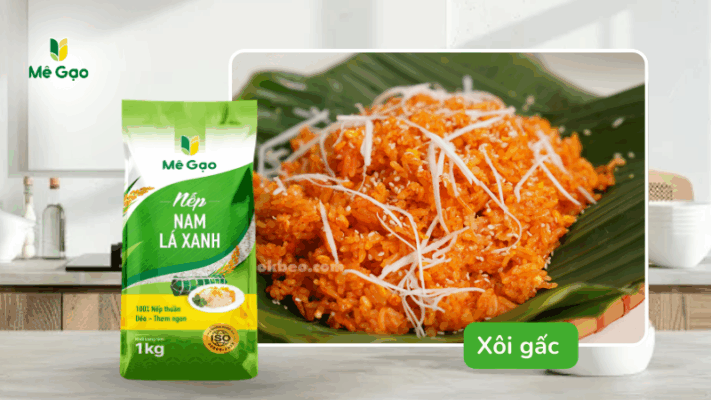
1. How to make lucky RED sticky rice
Red symbolizes luck and abundant fortune, and it is mainly extracted from the flesh of ripe gac fruit or fresh beetroot juice.
- Gac fruit: Scoop out the gac flesh and seeds and massage them evenly with a spoonful of white rice liquor to activate the pigment, which keeps the red brighter when heated. Mix this gac directly into the soaked glutinous rice.
- Beetroot: Peel the beetroot, chop it finely and blend it until smooth. Strain it through a sieve to get a concentrated juice, then use the juice to soak the glutinous rice for a brilliant crimson color.
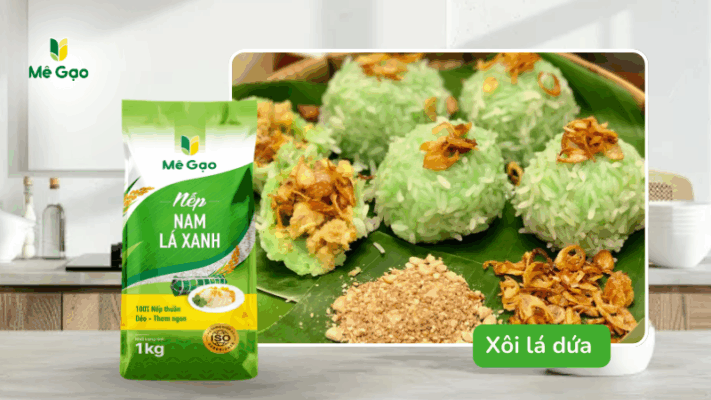
2. How to make GREEN sticky rice
A fresh green color brings a gentle, soothing feel and is usually made from fragrant pandan leaves or galangal or rattan leaves.
- Pandan leaves: Wash the pandan leaves, cut them into small pieces and put them in a blender with a little filtered water. Blend and squeeze the juice through a strainer. Soak the glutinous rice in this juice for a bright fresh green color and a subtle fragrance.
- Galangal/rattan leaves: Blending and squeezing the juice from galangal or rattan leaves creates a deep jade green that makes the sticky rice extremely eye-catching.
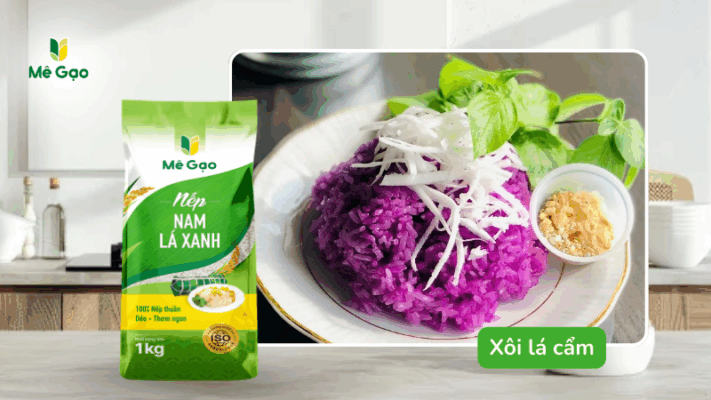
3. How to make PURPLE sticky rice
The dreamy, elegant purple of five-color sticky rice is mainly made by boiling magenta plant leaves or from the color-changing reaction of butterfly pea flower tea.
- Magenta plant leaves: Wash the leaves and boil them thoroughly with a moderate amount of water for about 15 – 20 minutes. Strain out the leaves and use the liquid to soak the glutinous rice. Adjusting the amount of water lets you make the sticky rice anywhere from pinkish purple to deep royal purple.
- Butterfly pea flowers: Steep butterfly pea flowers in hot water to get a blue liquid. Then squeeze in a few drops of lime juice; the acid reaction instantly turns the liquid from blue to a vivid purple.
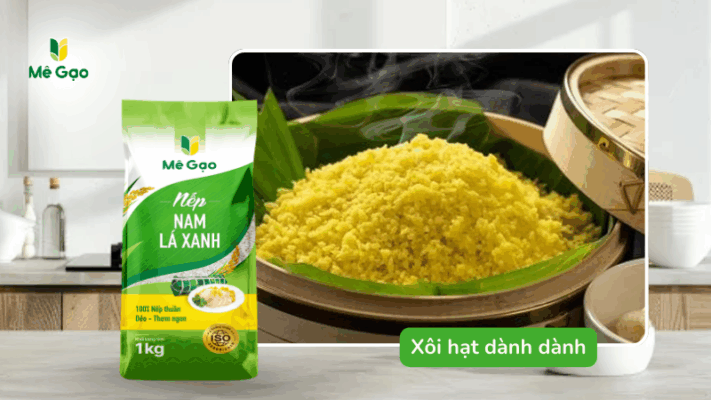
4. How to make YELLOW sticky rice
Yellow represents abundance and prosperity and is very easy to extract from traditional fresh turmeric or gardenia seeds.
- Fresh turmeric/turmeric powder: Crush fresh turmeric and squeeze out the juice, then dilute it, or dissolve pure turmeric powder directly in water. Soaking the glutinous rice in this liquid gives the grains a brilliant yellow color.
- Gardenia seeds: Crush the gardenia seeds and steep them in warm water to extract their distinctive golden yellow color. Strain out the seeds and use the liquid to soak the glutinous rice.
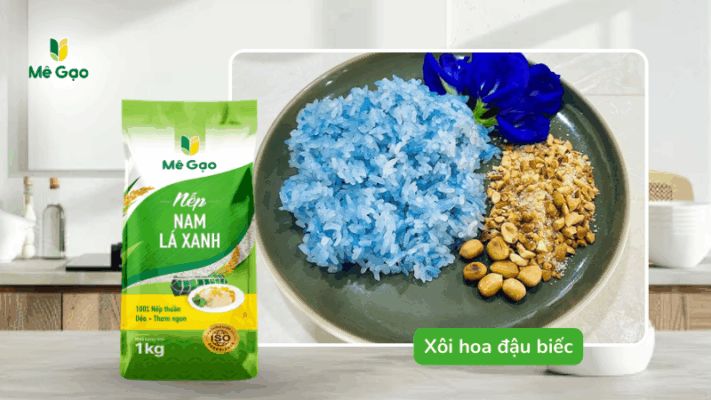
5. How to make BLUE sticky rice
The unique, elegant blue color comes from the essence of dried or fresh butterfly pea flowers steeped in very hot water.
- Put the butterfly pea flowers in a bowl, pour in boiling water and steep for 10-15 minutes to get a concentrated liquid.
- When the flowers have released all their blue color, remove them and use this pure liquid to soak the glutinous rice.
Tips for keeping sticky rice naturally colorful without fading
The secret to keeping five-color sticky rice naturally colorful without fading is to choose high-quality glutinous rice, soak it until it fully absorbs the colored liquid, steam it over boiling water and clearly separate the colors in the steamer.
-
Based on tips for choosing Glutinous Rice, choose fresh, unbroken grains to maximize color absorption and make the sticky rice plump and glossy.
-
Soak the glutinous rice for 4 to 6 hours (or overnight) so the grains fully expand and absorb plenty of the natural colored liquid.
-
Steam the rice in a steamer instead of boiling it in water.
-
Clearly separate the sections in the steamer (you can use banana leaves or heat-resistant food wrap) so the colors do not bleed into each other as steam condenses.
Frequently Asked Questions (FAQ)
What should you do if the pandan juice for sticky rice tastes bitter?
Bitter, astringent pandan juice is usually caused by using leaves that are too old or too many leaves for the amount of water. To fix this completely, choose only medium-aged pandan leaves (neither too young nor too old). When blending, add just enough filtered water and avoid using too many leaves.
How long can natural colored liquids be stored?
If not used right away, natural colored liquids can be safely stored in the refrigerator for 2 – 3 days. To keep them longer (up to 1 month), divide the liquid into ice cube trays, freeze it and thaw portions as needed.





