
 About Us
 News
 Store Locator
 Support
Nutritional Value of Japonica Rice: Calories, GI and Protein

Japonica Rice is not only famous for its soft, sticky texture and distinctive mild sweetness but is also highly valued for its nutrition. Unlike ordinary long-grain rice, Japonica rice contains a high proportion of amylopectin starch, providing a sustained, easy-to-digest source of energy.
So what does 100 g of Japonica rice contain, and what sets it apart from ordinary non-glutinous rice?
Nutrition facts of Japonica rice (per 100 g)
Below are the standard nutrition facts per 100 g of Japonica rice from the Mê Gạo brand:
| Nutrient | Amount |
| Energy | ≥ 347 kcal |
| Carbohydrate | ≥ 77.3 g |
| Protein | ≥ 8.0 g |
| Fat | ≥ 0.6 g |
| Sodium | ≥ 2.9 mg |
How is Japonica rice different from ordinary rice?
Japonica Rice is clearly different from long-grain non-glutinous rice in its starch structure, grain shape and eating experience.
1. Starch structure (high in amylopectin)
Japonica rice contains a higher proportion of amylopectin than ordinary rice, which makes the cooked rice sticky and cohesive while keeping it soft and moist long after cooking. This type of starch is also easier for the body to digest. In contrast, long-grain rice contains more amylose, so the cooked rice is usually drier, fluffier and less sticky.
2. Grain shape and quality
Japonica rice has short, round, plump grains that rarely break and are bright white, while ordinary rice has long, slender grains that break more easily during milling. Thanks to their round shape, Japonica grains retain water better during cooking, giving the rice a perfectly soft and sticky texture.
3. Texture and flavor after cooking
Once cooked, Japonica rice is very sticky, soft and slightly chewy, and it retains moisture well, so it stays soft and tender even when cooled. The rice also has a mild sweetness and a light natural aroma. Ordinary rice, on the other hand, cooks up fluffier and drier and hardens quickly as it cools. This difference is why Japonica rice is favored for dishes that need stickiness.
4. Culinary uses
Thanks to its high stickiness, Japonica rice is ideal for dishes such as sushi, rice balls, nutritious rice porridge or dishes that need to be shaped. Ordinary rice, by contrast, is better suited to everyday meals or fried rice, dishes that call for fluffy, separate, non-sticky grains.
Health benefits of Japonica rice
Japonica rice stands out not only for its stickiness and flavor but also for its many health benefits, thanks to its balanced nutritional profile and distinctive starch structure:
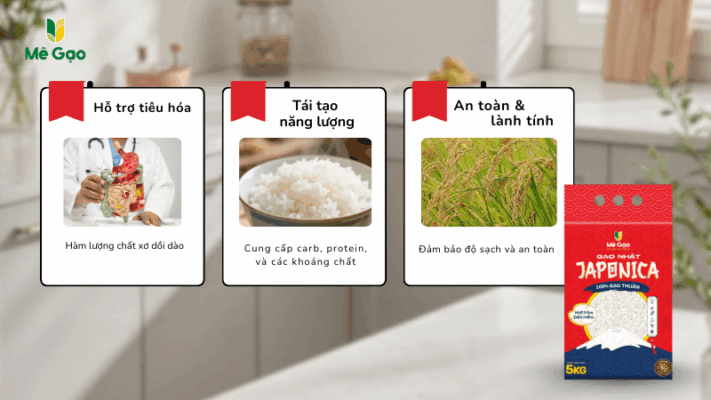
- Supports digestion: Plenty of fiber keeps the intestinal tract working smoothly and prevents constipation. The long-lasting feeling of fullness helps you manage your weight and figure effectively.
- Sustained energy: Provides complex carbohydrates, protein and essential minerals that help the body recover and maintain energy throughout the day.
- Safe and gentle: Completely gluten-free and unlikely to cause allergies, it suits even people with sensitive digestive systems. Thanks to modern farming methods, the rice is guaranteed to be as clean and safe as possible.
Who should eat 100% pure Japonica rice?
Thanks to its stickiness, soft texture, easy digestibility and rich nutrients, 100% pure Japonica rice is the ideal choice for many groups with specific nutritional needs.
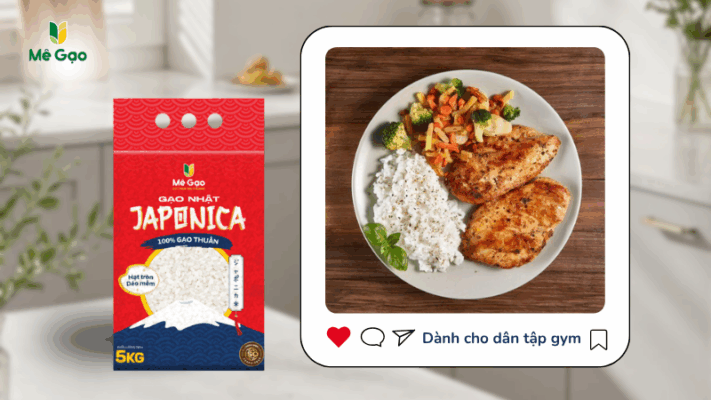
People who exercise (need clean energy)
For people who regularly do intense exercise, getting enough carbohydrates is extremely important. Japonica rice provides a large amount of energy (≥ 347 kcal) along with ≥ 77.3 g of carbohydrate, creating a sustained source of energy.
Its generous protein content (≥ 8.0 g) helps provide the building blocks for muscle. In addition, the minerals in the rice also help the body make use of protein and starch to restore energy.
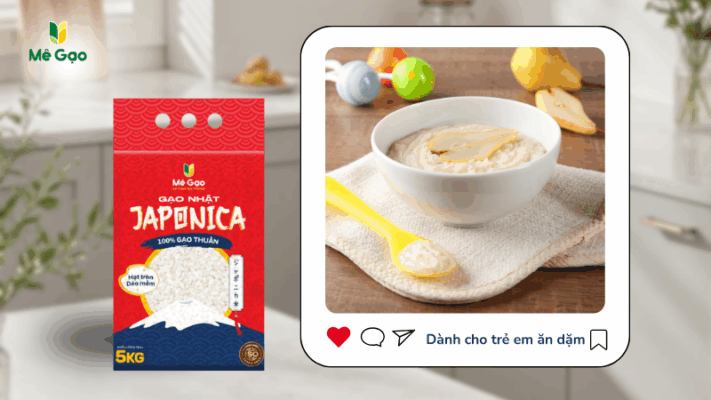
Babies starting solids (need soft, naturally sweet food)
The weaning stage is when a baby’s digestive system is still very immature. When cooked, Japonica rice is soft, sticky, lightly fragrant and mildly sweet, rich in nutrients and minerals, and stimulates the taste buds so babies enjoy their meals. The smooth texture of porridge or mushy rice made from Japonica rice helps babies absorb its nutrients fully. And because the rice stays soft and delicious even when cooled, it makes meal preparation more convenient for moms.
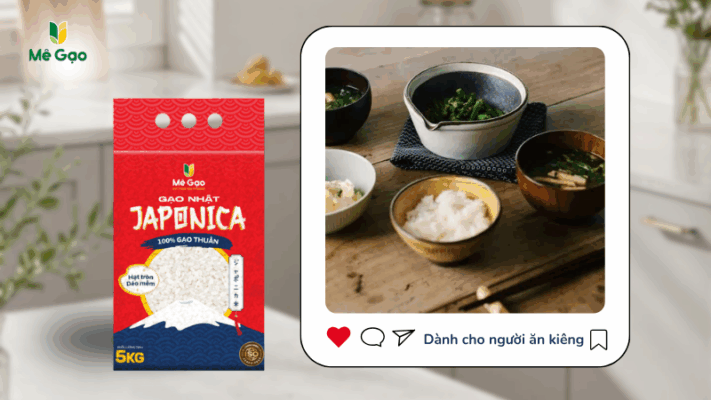
People on a diet (need portion control through lasting fullness)
This rice is low in sugar and has a medium glycemic index (GI), so it suits people on a diet, especially when included in an eat-clean menu with Japonica rice to manage weight scientifically.
Its abundant nutrients help you feel full longer and curb snack cravings, supporting your efforts to stay in shape in a scientific way.
How to cook Japonica rice to preserve its nutrients
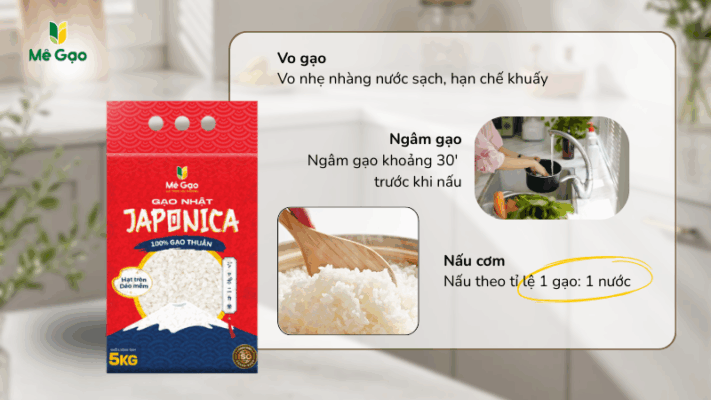
- Rinse the rice gently: First, pick out any grit or husks. Next, rinse the rice with water and pour off the dirty water. Stir gently to minimize the loss of nutrients in the outer bran layer.
- Soak the rice before cooking: Soak the rice for 30 minutes before cooking so the grains soften and the cooked rice turns out sticky and tender.
- Get the water ratio right: Measure rice and water at a ratio of 1 bowl of rice to 1.2 bowls of water (though you can adjust the amount of water to suit your taste).
- Avoid opening the lid and let the rice rest: During cooking, avoid opening the lid repeatedly; only open it and stir once the water has been absorbed. Finally, eat the rice 15 – 20 minutes after it is done, as this is when it tastes best.
Frequently Asked Questions (FAQ)
What is the glycemic index (GI) of Japonica rice?
Japonica rice has a medium glycemic index (GI), lower than some ordinary types of rice. As a result, Japonica rice helps balance blood sugar levels. It is especially suitable for people with diabetes or those managing their weight.
Does rinsing Japonica rice too thoroughly cause nutrient loss?
Yes, scrubbing the rice vigorously causes it to lose valuable nutrients. Most of the essential vitamins and minerals are concentrated in the bran clinging to the outside of the grain. So you should rinse the rice gently only 1 – 2 times to remove dust and dirt while preserving its pure nutritional value.





