
 About Us
 News
 Store Locator
 Support
Origin of the Jasmine Rice Variety: Provenance and Characteristics

There are many different types of rice on the market today, and fragrant jasmine rice is a favorite of many consumers thanks to its aroma and natural sweetness. However, shoppers often wonder about its exact origin and how to tell it apart from other products.
Where does the jasmine rice variety come from?
Fragrant jasmine rice is a white rice grown mainly in the Mekong Delta. This region has favorable agricultural conditions thanks to its network of rivers and fertile land, creating an ideal environment for rice plants to thrive.
Identifying characteristics of genuine jasmine rice
To choose quality rice, consumers can rely on the following identifying characteristics of fragrant jasmine rice:
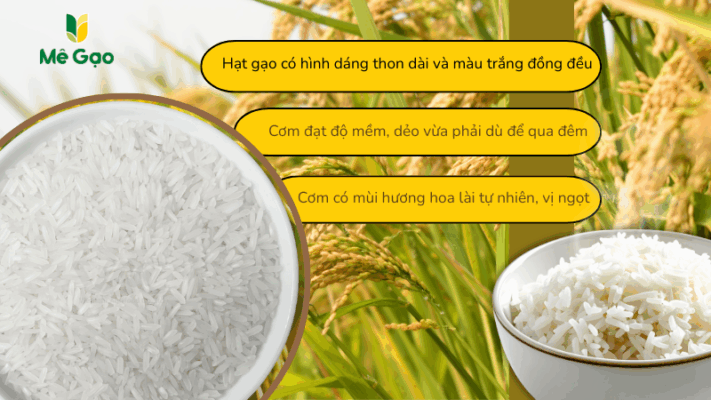
- Appearance: The grains are long and slender with a uniform white color.
- Characteristics when cooked:
- Aroma: When cooked, the rice gives off a gentle, natural jasmine flower scent.
- Taste: The rice has a natural sweet aftertaste that is not too strong.
- Texture: The rice is moderately soft and sticky. It keeps its flavor and does not dry out or harden when left overnight.
Why does jasmine rice thrive in the Mekong Delta?
The Mekong Delta is considered the “capital” of jasmine rice thanks to its combination of favorable climate and geography:
1. Soil analysis (tolerates mildly acidic, saline soil)
Unlike many rice varieties that are picky about soil, rice varieties in the jasmine group (especially improved hybrid lines) are remarkably adaptable.
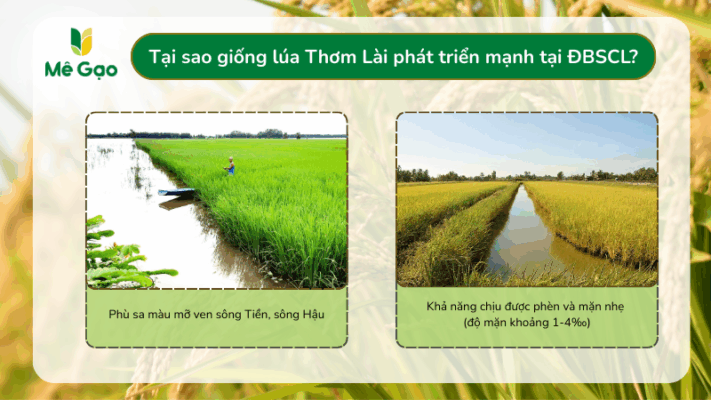
- They grow well on the fertile alluvial soil along the Tien and Hau rivers.
- In particular, this rice variety can tolerate acid sulfate soil and mild salinity (about 1-4‰). This allows it to thrive even in coastal areas or rice–shrimp rotation areas (such as Long An and Kien Giang), where the land is often affected by saltwater intrusion.
2. Growing season (short duration, high yield)
- Today’s jasmine rice consists mainly of short-duration varieties, with a growing period of only 95 – 105 days (about 3-3.5 months).
- Their short duration allows farmers to grow 2-3 crops per year and avoid the peak drought and salinity at the end of the season.
- Yields are very impressive, averaging 7 – 8 tons/ha and even reaching 9 tons/ha with good intensive farming, bringing far greater economic returns than older long-duration main-season rice varieties.
The economic value of fragrant jasmine rice
Fragrant jasmine rice is widely consumed thanks to its balance of quality and price:
- Price: The reference market price ranges from 20,000 – 25,000 VND/kg.
- Uses: The product suits a wide range of customers, from households to schools, hospitals and factories.
- Cost savings: Buyers can choose 10 kg bags for a better price and lower shipping costs.
In addition, jasmine rice is also well suited to dishes such as seaweed rice rolls, baby clam rice (com hen) and curry rice.
Frequently Asked Questions (FAQ)
Which regions commonly grow jasmine rice today?
Quality fragrant jasmine rice usually comes from the Mekong Delta because of its favorable soil and water conditions.
Is cooked jasmine rice sticky or fluffy?
Fragrant jasmine rice belongs to the moderately sticky group. The cooked rice is soft, keeps its grain shape and does not dry out or harden when left overnight.
How should you store jasmine rice?
Keep the rice in a dry place and close the lid of the container tightly after each use. You can place garlic or dried chili peppers on top of the rice to keep weevils away. The usual shelf life is 1 year from the production date.
How do you cook jasmine rice?
The recommended water ratio is 1 part rice : 1 to 1.1 parts water. After the rice is cooked, wait another 5-10 minutes to let it dry slightly, then fluff it.
How is fragrant jasmine rice different from DT8 Rice?
Fragrant jasmine rice belongs to the moderately sticky group, whereas DT8 Rice is usually stickier by comparison. When cooked, DT8 Rice grains expand moderately and are moderately sticky, soft yet still fluffy.





