 About Us
 News
 Store Locator
 Support
ST25 Rice for People with Diabetes to Help Stabilize Blood Sugar
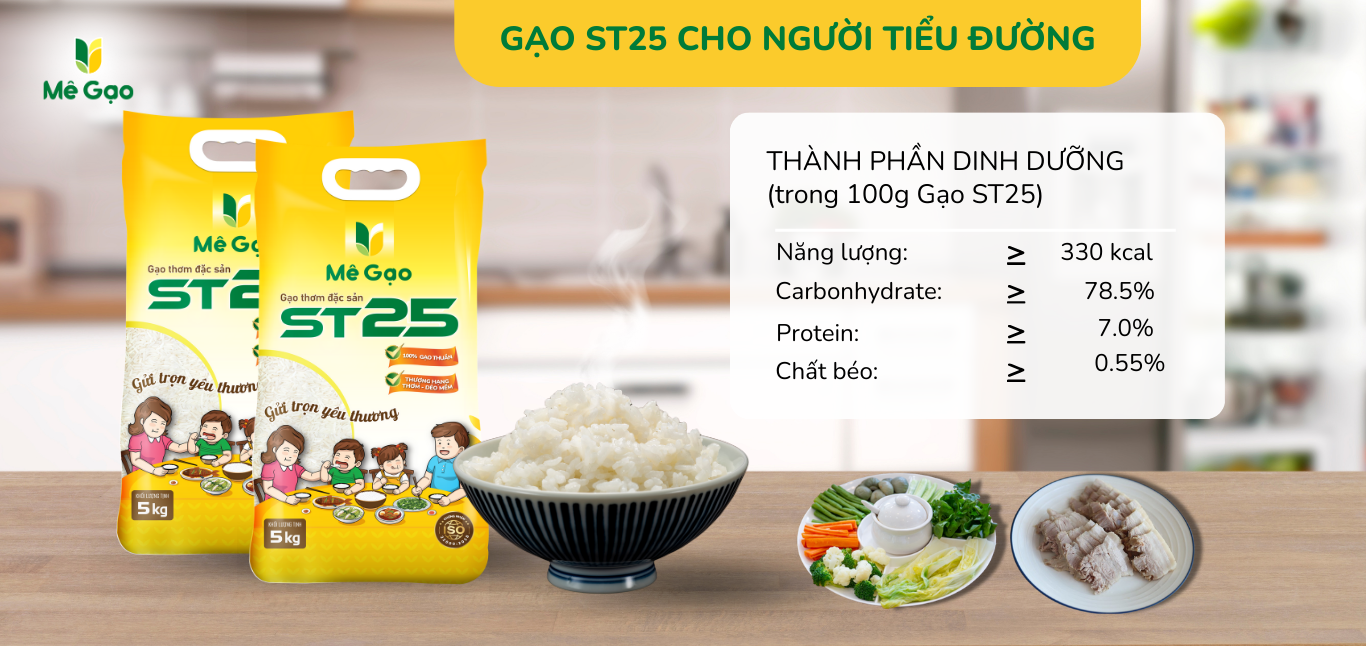
People with diabetes often live with an obsession called “starch”. Cutting out rice completely leaves the body tired and causes blood sugar to drop, but eating ordinary white rice makes the glycemic index (GI) spike. ST25 Rice, especially its brown rice lines, has emerged as a golden solution. However, not every rice labeled ST25 is safe for people with diabetes.
In this article, Mê Gạo takes an in-depth look at its nutritional value to help you correctly understand how resistant starch works and choose the most suitable rice for keeping your blood sugar stable.
Nutritional differences between white rice and ST25 brown rice
Although both are main sources of energy, the structure of the rice grain directly determines how blood sugar changes after a meal.
- Ordinary white rice: Because it has been thoroughly milled to remove the bran and germ, only the starchy core (endosperm) remains. Once in the body, this starch converts into glucose very quickly, causing blood sugar to spike suddenly.
- ST25 brown rice lines: Because they keep the nutrient- and fiber-rich bran layer, the grains are digested more slowly. This helps blood sugar rise gradually and steadily instead of spiking. You will feel light, energetic and full for longer.
Below is a detailed comparison table to help you see the difference:
| Criteria | Ordinary white rice | ST25 Rice (Brown/Whole bran) |
| Processing | Thoroughly milled; husk, bran and germ removed. | Keeps the nutrient-rich bran layer and germ. |
| Main components | Mostly empty starch. | Complex starch, rich in fiber and B vitamins. |
| Absorption rate | Fast (causes sudden blood sugar spikes). | Slow (releases energy gradually). |
| Glycemic index (GI) | High. | Low to medium. |
| Feeling of fullness | Get hungry quickly. | Stay full longer, fewer snack cravings. |
The most suitable ST25 rice types for people with diabetes
Many customers wonder how many types of ST25 Rice there are and which one is truly safe for people with diabetes. If you have diabetes, you should prioritize the following lines:
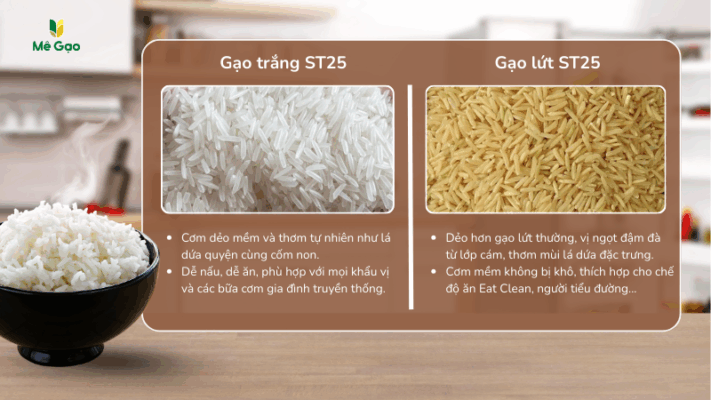
ST25 brown rice (rice that still has its outer bran layer)
ST25 brown rice (including red, dark purple or brown rice) is a top choice in the diet of people with metabolic disorders. You can recognize it because only the husk has been removed, leaving the bran layer and germ fully intact.
- How it controls blood sugar: The bran layer surrounding the grain acts as a natural “shield”. It contains many times more fiber than white rice, forcing the digestive system to work more slowly. As a result, sugar is released into the blood gradually, avoiding sudden blood sugar spikes after meals.
- Outstanding advantage: Unlike traditional brown rice, which is often dry, hard and difficult to swallow, ST25 brown rice inherits the tender genes of the ST rice variety. The cooked rice is soft and tender with a thin, easy-to-eat bran layer, helping patients stick to a long-term diet without getting bored or having stomach pain.
ST25 germinated rice
ST25 germinated rice is a premium upgraded version, made by germinating ST25 brown rice under strictly controlled humidity and temperature.
- Why is it good for people with diabetes? Science has shown that stress and lack of sleep make the body more insulin resistant. ST25 germinated rice not only has a low GI (because it is essentially brown rice) but also helps stabilize blood sugar indirectly by balancing the nervous and endocrine systems.
- Taste experience: Germinated rice is usually even softer than brown rice and has the natural mild sweetness of rice sprouts, making it very suitable for the elderly or people with weak teeth.
Rules for eating rice without worrying about blood sugar spikes when using ST25 Rice
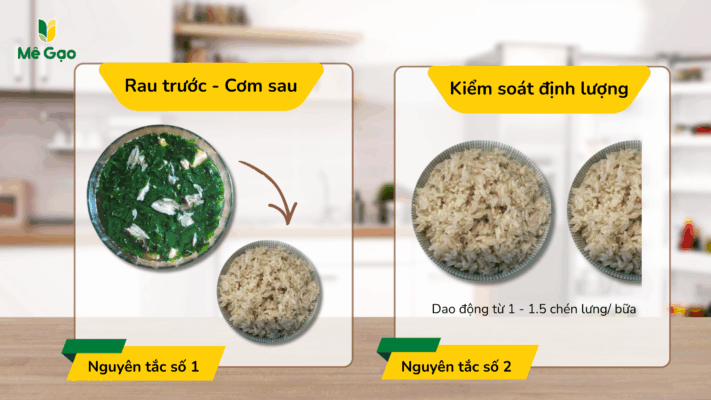
- The “Vegetables first, rice later” rule: Eat a plate of green vegetables or a bowl of soup before eating rice. The fiber in vegetables “lines the stomach” and slows the absorption of sugar from the rice.
- Control portions: Even ST25 brown rice still contains carbs, so you need to eat the right portion. Consult your doctor for the right amount (usually 1 – 1.5 small bowls per meal).
Notes when buying genuine ST25 Rice
Today, many rice products on the market are labeled ST25 but are blended or counterfeit, posing risks to patients’ health. Mê Gạo shows you how to tell real ST25 rice from fake through the following criteria:
- Has a logo/label certifying a clear origin
- Carefully sealed packaging with transparent information.
- Uniform grains with a natural pandan fragrance and no musty smell.
Mê Gạo is a supplier of quality pure ST25 rice in Vietnam. Instead of buying from unknown sources, choose a reputable retailer to get accurate advice on the rice that suits your taste and health condition.
Frequently Asked Questions (FAQ)
Does ST25 brown rice need to be soaked before cooking?
Not necessarily. Because the ST25 variety is naturally soft and tender, simply rinse it lightly and cook it with slightly more water than white rice (1 part rice : 1.5 – 1.8 parts water). If you want the rice even softer for elderly people, you can soak it for 15-20 minutes.
Why is my blood sugar still high when I eat ST25 brown rice?
There may be 2 reasons: You eat too much (thinking that because it is brown rice you can eat more), or you do not chew thoroughly. Chewing thoroughly mixes in salivary enzymes and sends fullness signals to the brain sooner, helping you eat less.
Does GABA germinated rice taste sour?
Genuine ST25 GABA germinated rice has a light aroma and mild sweetness and is not sour at all. If it tastes sour, the rice has gone bad or was fermented incorrectly.
Conclusion
Choosing ST25 Rice for people with diabetes is a safe solution that lets patients fully enjoy delicious meals while staying confident about their blood sugar. Not sure which rice suits your taste best?
Contact Mê Gạo now for detailed advice and special offers to try healthy pure ST25 Rice.