 About Us
 News
 Store Locator
 Support
Thai Jasmine Rice vs. ST25 Rice: Which Is the True “King” of Delicious Rice?

Are you torn between Thai jasmine rice (Hom Mali) and ST25 Rice? While Thai jasmine rice is famous for its Thai origin, natural jasmine flower fragrance and moderately sticky, firm texture, ST25 Rice has earned its place with international production standards, a pandan aroma blended with notes of young green-rice flakes and its signature soft, tender texture. Both have beautiful long, slender, translucent white grains, but which one best suits your family’s taste?
This article offers a detailed comparison to help you choose the right rice for your family meals.
Quick comparison table of Thai jasmine rice and ST25 Rice
Below is a table summarizing the core indicators based on the product characteristics:
| Criteria | Thai jasmine rice (Hom Mali) | ST25 Rice |
| Origin | Thai fragrant rice variety (Hom Mali), widely grown in the Mekong Delta (Long An, Dong Thap…). | Rice variety meeting international standards, produced to FDA, HACCP, HALAL and ISO 22000:2018 standards |
| Grain shape | Long, slender, translucent white, uniform, not chalky. | Long and slender, translucent white, not chalky, beautiful whole grains. |
| Stickiness | Soft, moderately sticky, firm grains that do not fall apart. | Soft and tender, grains expand only slightly. |
| Aroma | Gentle, natural fragrance | Pandan aroma blended with notes of young green-rice flakes. |
| Highlights | Mildly sweet, stays soft and tender when cooled | Mildly sweet, stays soft and tender when cooled without drying out or hardening |
A detailed look at the differences between Thai jasmine rice and ST25
Origin and rice variety
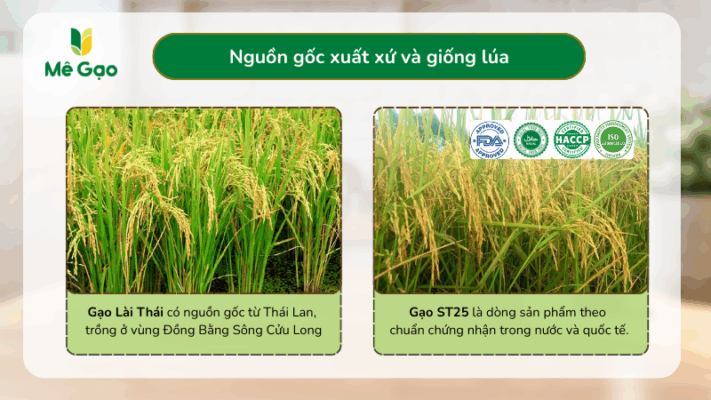
- Thai jasmine rice: Also known as Thai fragrant rice, Lai Sua (milky jasmine) rice or Hom Mali. This famous fragrant rice variety originated in Thailand. Thanks to suitable soil, it is now widely bred and grown in Mekong Delta provinces such as Long An, Dong Thap, An Giang and Soc Trang.
- ST25 Rice: Produced to international standards and in compliance with strict certifications such as FDA, HACCP, HALAL and ISO 22000:2018, ensuring food safety and high quality.
Grain characteristics and appearance
Interestingly, these two types of rice look quite similar at first glance:
- Thai jasmine rice: The grains are long, slender, translucent white, uniform and not chalky, looking very attractive.
- ST25 Rice: The grains are also long, slender, translucent white, not chalky and stay whole.
Flavor and stickiness when cooked
The clearest difference lies in the texture and aroma of the cooked rice:
- Stickiness:
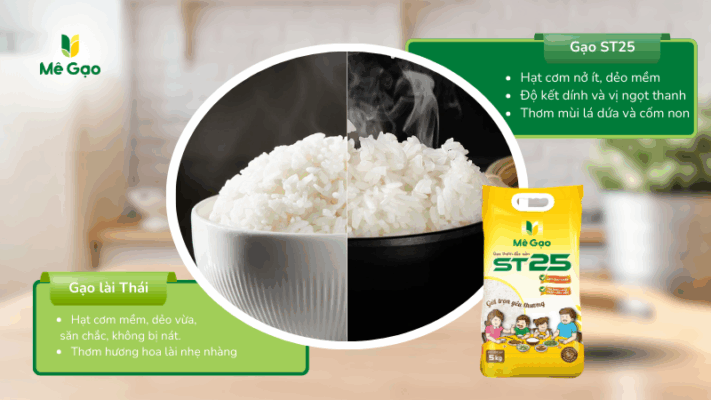
- ST25 Rice: When cooked, the grains expand only slightly but are very soft and tender. The rice binds well and has a distinctive mild sweetness.
- Thai jasmine rice: The cooked rice is soft and moderately sticky. In particular, the grains are firm and do not fall apart or break.
- Aroma:
- ST25 Rice: Has a complex, natural aroma like pandan blended with young green-rice flakes, fragrant even before the rice is cooked.
- Thai jasmine rice: Characterized by the light, delicate fragrance of jasmine flowers, creating a pleasant feeling.
Current market prices of ST25 Rice and Thai jasmine rice
Because of its growing process and brand, ST25 Rice is usually in a higher price range than Thai jasmine rice. Thai jasmine rice is a popular choice for everyday meals, with a more affordable price while still being delicious and fragrant.
Should you buy Thai jasmine rice or ST25 for your family?
Who should choose Thai jasmine rice (Hom Mali)?
- People who like moderately sticky rice that is not too clingy.
- Families looking for rice that makes great fried rice: Thanks to its firm grains that do not break, Thai jasmine rice is an excellent choice for fried rice.
- Restaurants and hotels that need rice with consistent quality, beautiful grains and an appealing flavor.
Who should choose ST25 Rice?
- People who prefer very sticky, soft rice with a rich pandan aroma.
- Families who care about high nutritional value
- People who want cooled rice to stay as soft and tender as when it was freshly cooked.
How to tell real Thai jasmine rice and ST25 from fake
To avoid buying the wrong product, check the packaging and grain characteristics carefully:
Look at the grains: Both types have long, slender, translucent white grains that are not chalky. However, you should look closely at their uniformity; the grains should be whole and attractive.
Check the aroma:
- Thai jasmine rice: Characterized by the natural fragrance of jasmine flowers, a gentle yet distinct scent.
- ST25 Rice: Has a very distinctive, natural aroma like pandan blended with young green-rice flakes, which comes through even before the rice is cooked.
Note: Both genuine types of rice have a gentle, natural fragrance. Therefore, you should learn how to spot artificially scented rice to avoid buying products with a harsh chemical smell that can harm your health.
Check the packaging and quality standards:
- For ST25 Rice, genuine products must have international production certifications printed on the packaging, such as ISO 22000:2018, HACCP, FDA and HALAL.
- ST25’s quality indicators are also very specific: Moisture ≤ 14%, broken grains ≤ 5% and protein content ≥ 7.0 g
Where to buy delicious, clean and authentic rice?
To protect your family’s health and enjoy the true premium flavor, you should buy rice from retailers that guarantee a clear origin. Based on the current official distribution network, you can buy at:
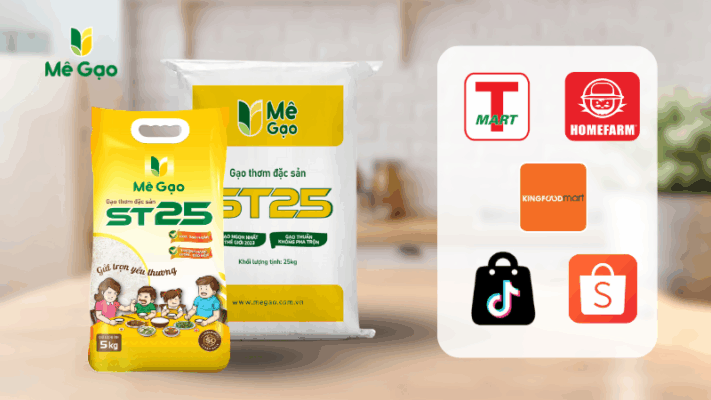
- In Hanoi: You can visit Tmart supermarkets or HomeFarm food stores.
- In Ho Chi Minh City: Our products are available at KingFoodMart supermarkets.
- Online shopping: For convenience and to make sure you buy genuine products from the Mê Gạo brand, you can order directly through Mê Gạo’s stores on e-commerce platforms such as TikTok Shop or Shopee
Frequently Asked Questions (FAQ)
How do you cook Thai jasmine rice for the best results?
Rinse the rice gently 1-2 times. The standard water ratio is 1 bowl of rice : 1.2 bowls of water (adjust as needed). Once it boils, do not open the lid for the first 15 minutes. After cooking, let the rice rest for 5-10 minutes so the grains become stickier and less wet.
How should you store ST25 and Thai jasmine rice so they do not lose their aroma?
Both are fragrant rice, so they should be stored in a dry, cool, well-ventilated place with the rice bin lid tightly closed to keep out insects and preserve their natural aroma as long as possible.
Should you mix ST25 Rice and Thai jasmine rice together?
You certainly can. Combining the “soft, tender, low-expansion” quality of ST25 with the “firm, moderately sticky” quality of Thai jasmine rice creates a pot of rice with an interesting texture that is both sticky and fluffy, ideal if your family members have different preferences.