 About Us
 News
 Store Locator
 Support
Tips for Choosing and Buying 100% Pure Dai Thom Rice

Dai Thom Rice has long been a favorite on many Vietnamese family tables thanks to its perfect balance of stickiness and flavor. But how can home cooks make sure they choose rice that is 100% pure, clean and safe?
Mê Gạo shares tips for choosing Dai Thom Rice to help you confidently pick a bag of delicious, clean and safe rice for your family.
Criteria for recognizing 100% pure Dai Thom Rice
The key to a delicious bowl of rice lies in the purity of the grain. Genuine Dai Thom Rice must be produced to the 100% Pure Rice standard: absolutely no blending, only a single type of rice, grown from a purebred rice variety. To verify this, try the following 3 tests:
Look at the grains: Translucency and uniformity
With the naked eye, look closely at the packaging or a handful of rice. High-quality Dai Thom Rice has large, long, translucent white, plump grains that are whole and unbroken.
Smell the aroma: Telling “natural fragrance” from “artificial flavoring”
Genuine Dai Thom Rice has a gentle, distinctive aroma like natural pandan leaves. If you open the bag and a harsh scent hits your nose, then quickly fades after a few rinses, it may be a sign that the rice has been artificially scented
Chew a few raw grains: Taste the sweetness of the starch
A little trick home cooks use is to chew a few raw grains. Good, nutritious rice has a natural sweet aftertaste and a moderately firm, crisp texture rather than being crumbly.
Comparison of pure Dai Thom Rice and blended rice
To help you see the difference easily, here is a detailed comparison:
| Criteria | Pure Dai Thom Rice | Blended/poor-quality rice |
| Uniformity | Whole, unbroken grains | A mix of large and small grains, many broken grains. |
| Color | Translucent white, plump grains. | Uneven color (some translucent, some opaque grains). |
| When cooked | Expands moderately, moderately sticky, soft yet fluffy | Cooks unevenly, mushy in some places and dry in others. |
| Aroma | Gentle pandan fragrance. | Pungent smell or no smell at all. |
| Safety | Meets FDA, HALAL, HACCP and ISO 22000:2018 standards. | Unknown origin, risk of chemical residues. |

“Counterfeiting” tricks with Dai Thom Rice to watch out for
Here are 4 common tricks you should be aware of:
- “Whitening” old rice: Old, moldy rice is bleached with chemicals to look like new rice. This rice usually loses its natural bran layer, and the grains lack gloss.
- Artificial scenting (artificial pandan flavoring): To imitate the pandan aroma of Dai Thom Rice, dishonest traders may use flavorings. This scent usually disappears completely after cooking.
- The “name swap” trick: Mixing cheap ordinary rice into Dai Thom Rice to increase profits while still labeling it “pure Dai Thom Rice”. This goes against the 100% no-blending standard that consumers are looking for.
- “Immature” rice (dried and pressed rice): Rice harvested before it is fully ripe is then dried and pressed so the grains look attractive, but it tastes bland and lacks nutrients.
Buying by harvest season: Should you eat new-crop or old-crop rice?
Every family’s taste is different, and the harvest time greatly affects how sticky the cooked rice is.
1. New-crop rice: The peak of stickiness
If you like rice that is very soft and moderately sticky, choose new-crop rice. At this stage, the grains still retain plenty of natural starch, so the cooked rice is glossy, smooth, fluffy and at its most fragrant.
2. Old-crop rice: For those who like firmer rice
Rice stored for a long time (over 6 months) usually expands more and is less sticky. However, with 100% pure Dai Thom Rice that is carefully selected and produced under a strict process, the cooked grains still keep a certain fluffy softness rather than drying out and hardening like mixed rice.
How to store Dai Thom Rice to preserve its full flavor
To preserve the best nutrition and flavor, keep the following in mind:
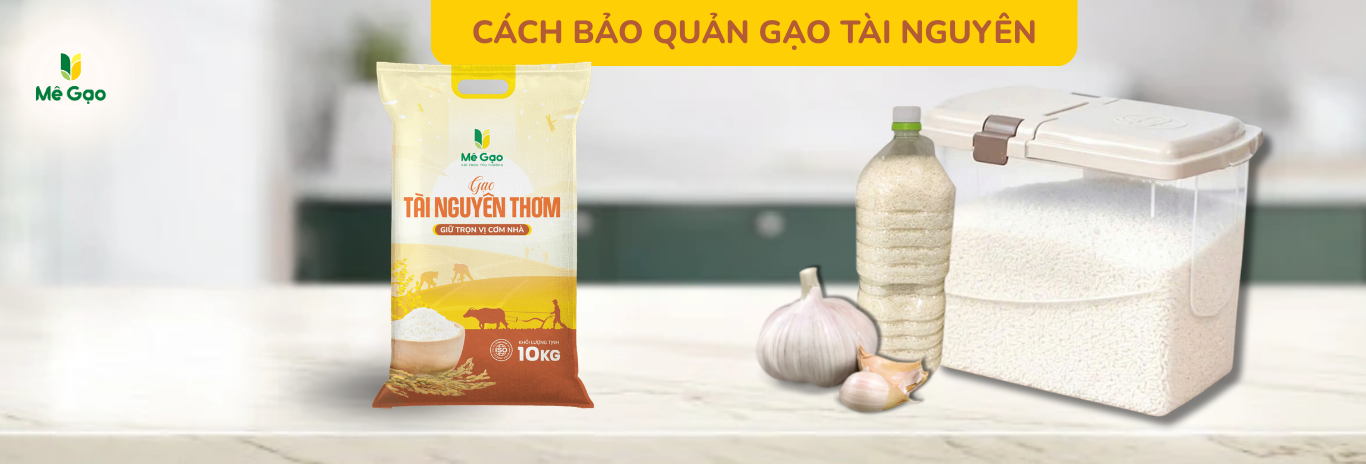
- Control moisture: Store Dai Thom Rice in an airtight bin in a dry, cool, well-ventilated place.
 Keep insects away: The rice’s natural aroma strongly attracts weevils. You can put a few garlic cloves in the rice bin to repel insects naturally

Where to buy genuine Dai Thom Rice?
To make sure you buy rice with a genuine origin that holds strict international certifications (FDA, ISO 22000:2018…), you should go to officially authorized retailers.
1. Buy directly at reputable store chains and supermarkets
The Mê Gạo brand now distributes its products through major retail chains, making shopping easy:
- In Hanoi: You can visit Tmart and HomeFarm stores.
- In Ho Chi Minh City: The product is available at KingFoodMart
2. Official stores on e-commerce platforms
If you buy online, carefully check the details of Mê Gạo’s official stores. You can also contact us directly via our hotline 0973 978 039 for directions to the nearest store.
Frequently Asked Questions (FAQ)
How much does DT8 Rice cost per kg today?
Rice prices vary over time and by supplier, ranging from 23,000 VND to 25,000 VND per kg. Be wary of rice that is too cheap; quality rice produced to ISO and HACCP standards will be priced in line with the nutritional value it provides.
Which is better, DT8 Rice or ST25 Rice?
Neither is absolutely “better”; one is simply “more suitable” than the other.
ST25 Rice is usually very sticky.
Dai Thom Rice is moderately sticky, very soft and expands moderately. It is the ideal choice for those who do not like rice that is too sticky or too dry, and you will never tire of it
Does Dai Thom Rice need to be soaked before cooking?
No, it is not necessary. With translucent, unbroken grains and a standard moisture content of ≤ 14%, simply rinse the rice and cook it with the right amount of water, and it will cook evenly and turn out soft and fluffy.