 About Us
 News
 Store Locator
 Support
How to Make Authentic Japanese Sushi with Japonica Rice at Home

Sushi is a famous traditional Japanese dish whose main component is vinegared rice (shari) combined with other ingredients, most commonly fresh raw seafood, vegetables, egg or meat. To make an authentic sushi roll at home, choosing the right rice and mastering the technique are the deciding factors.
In this article, Mê Gạo gives you a detailed guide to making authentic Japanese sushi with Japonica Rice, so you can create sushi rolls that are tender, hold together well and keep their original flavor.
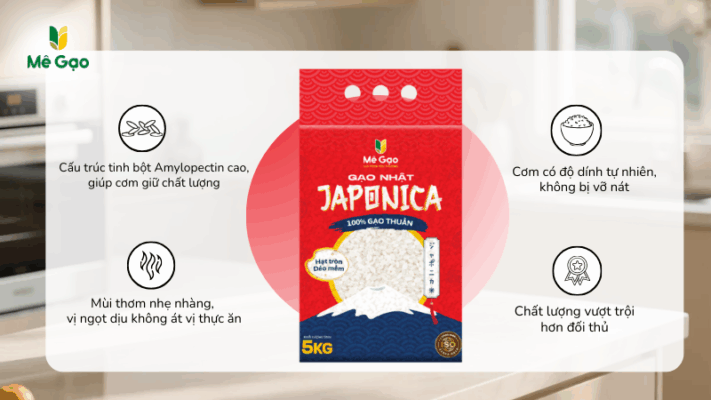
Why is Japonica Rice the “soul” of sushi?
In sushi, the vinegared rice (shari) is not just the base; it directly determines the flavor, texture and overall quality of the dish. In Japanese cuisine, chefs always prefer Japonica Rice for Japanese restaurants because it meets all of the strictest standards for sushi rice.
- Japonica Rice stands out for its short, round, plump and starchy grains, which give the cooked rice a natural stickiness. As a result, when you roll sushi, the rice holds firmly together and does not fall apart when cut, keeping an attractive shape.
- Beyond its great texture, Japonica Rice also has a light sweetness and a gentle aroma. This flavor does not overpower but instead highlights accompanying ingredients such as salmon, shrimp or vegetables, creating the signature balance of sushi.
- Another important advantage is its ability to stay soft when cooled. Since sushi is usually eaten at room temperature, Japonica Rice keeps the rice from drying out and hardening, so it stays tender and easy to eat after preparation.
- In addition, this rice absorbs vinegar very well. When mixed with vinegar, the rice absorbs the seasoning evenly without turning mushy, keeping the elasticity and gloss needed for proper sushi rice.
For the best results, choose rice of consistent quality such as Mê Gạo Japonica Rice, with uniform, unblended grains that keep your rice tender, delicious and safe to eat.
Prepare the ingredients (serves 2-3)
To make proper sushi with Japonica Rice, preparing the ingredients in the right proportions is very important. The balance of rice, vinegar and filling determines the final flavor of the dish.
- Rice: 2 cups of Japanese Japonica Rice.
- Water: 3 cups of water.
- Sushi vinegar: 1/2 cup of rice vinegar, 2 tablespoons of sugar, 1/2 teaspoon of salt (or ready-made sushi vinegar).
- For rolling: Nori seaweed sheets.
- Sushi fillings: Fresh salmon, shrimp, cucumber, avocado, rolled omelet, etc.
With all of the ingredients above prepared in the right amounts, you can easily control the flavor and texture, laying a good foundation for the following sushi-making steps.
How to make sushi with Japonica Rice
To make sushi with Japonica Rice as authentic as in Japanese cuisine, follow each step correctly, from cooking the rice to rolling the sushi. Every stage directly affects the stickiness, cohesion and flavor of the sushi rice.
Step 1: Rinse and soak the rice
- Gently rinse the rice 2-3 times until the water runs clear.
- Soak the rice for about 30 minutes so the grains absorb enough water, making the rice tender and delicious.
Step 2: Cook the rice with the right water ratio
- Cook the rice with water at the standard ratio (1 part rice : 1.2 parts water).
- Bring to a boil, then reduce to low heat for 10-15 minutes until cooked.
- Turn off the heat and let it rest for about 10 minutes.
Step 3: Vinegar-mixing technique
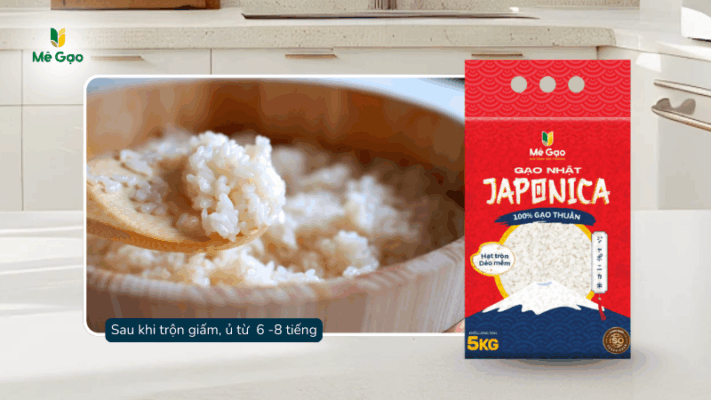
- While the rice is hot, transfer it to a tray (ideally a wooden one). Hot rice absorbs vinegar better.
- Mix it evenly with the vinegar mixture (with the sugar and salt already dissolved). Note: When making the vinegar mixture, heat it only gently to dissolve the seasonings; do not boil it, or the flavor will evaporate.
- Mix quickly and gently so the grains do not break, while lightly fanning the rice to cool it.
- Tip: After mixing, let the rice rest for about 6-8 hours so it becomes more tender and delicious.
Step 4: Roll the sushi tightly
- Lay a sheet of nori on a bamboo mat and spread a thin layer of rice on top, leaving a small strip of seaweed uncovered at the edge.
- Arrange the filling in the middle and roll tightly.
Tips for cutting sushi neatly without it falling apart
To get perfect sushi slices without the filling slipping out or the rice breaking apart, use a few basic cutting techniques:
- For neat sushi slices, use a very sharp knife. A sharp blade makes clean cuts without dragging or breaking the structure of the rice.
- Before cutting, moisten the blade by dipping it in clean water or coating it with a thin layer of cooking oil. This reduces how much rice sticks to the knife, so the cuts are smoother and sharper.
- While cutting, wipe the blade clean with a damp cloth after each cut. This removes starch stuck to the knife and prevents the next slices from sticking and losing their shape.
- Cut decisively in a straight line, without pressing hard or sawing back and forth. With just enough pressure and a sharp knife, the sushi roll will keep its shape perfectly.
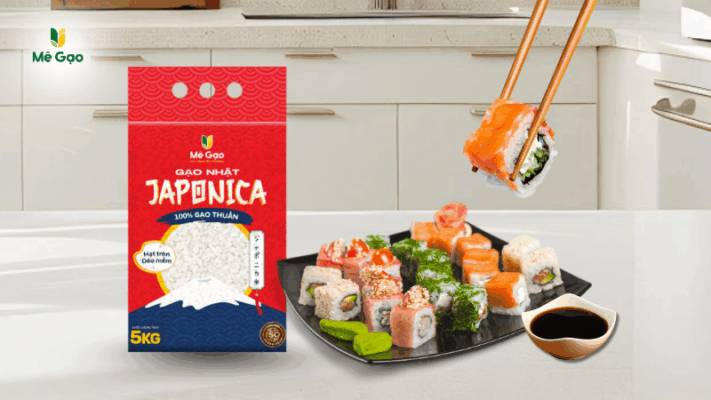
Delicious sushi filling variations with Japonica Rice
Besides traditional ingredients such as fresh raw salmon or tuna, you can be creative with sushi fillings to better suit Vietnamese family tastes. Here are 3 easy-to-enjoy combos:
- Fried Shrimp & Avocado Combo: Crispy breaded fried shrimp combined with rich, creamy butter avocado. The contrast between the crunchy shrimp coating and the tender rice creates a wonderful taste experience.
- Rolled Omelet, Sausage & Cucumber Combo: A perfect and safe choice for young children. The sweet and savory sausage, soft fried egg and refreshing crunch of cucumber keep the dish from feeling heavy.
- Teriyaki Stir-Fried Beef & Asparagus Combo: Beef marinated in rich teriyaki sauce, stir-fried until just cooked and rolled with blanched asparagus.
Frequently Asked Questions (FAQ)
Why is my sushi rice mushy?
The main cause usually lies in the water ratio when cooking or in the vinegar-mixing process. If you do not drain the rice completely after rinsing, the leftover water will throw off the cooking ratio.
In addition, pouring too much vinegar into the rice when mixing also makes the grains soggy and causes them to lose their elasticity.
Can I use apple cider vinegar or Vietnamese rice vinegar instead of Japanese vinegar?
Absolutely. However, apple cider vinegar and Vietnamese rice vinegar are usually more acidic (sourer) than Japanese rice vinegar.
To compensate, adjust the seasoning by adding a little more sugar and filtered water to the vinegar mixture to rebalance the flavor before mixing it into the rice.
Can leftover Japonica Rice be used to make sushi?
You can certainly use cold Japonica rice, as this rice stays soft and delicious even when cooled. However, for sushi rolls with the best cohesion and perfect flavor, professional chefs always recommend using freshly cooked rice mixed with vinegar while still warm.