 About Us
 News
 Store Locator
 Support
ST25 Rice Farming Process: Preventing Pests and Diseases Without Chemicals

Want to grow the ST25 rice variety but worried about pests, diseases and yields without chemical pesticides? To achieve strict certifications such as USDA or EU Organic, farmers need to strictly follow every step of the process, from soil treatment and sowing density to biological nutrient management.
Mê Gạo shares the complete organic ST25 rice farming process from A to Z, helping farmers optimize costs and ensure the finished rice achieves its signature aroma and sweetness.
1. Ideal ecological and growing conditions
Before sowing, farmers need to understand the ecological characteristics of the ST25 variety in order to farm “in harmony with nature”:
- Variety characteristics: ST25 is a temperature-sensitive rice variety with sturdy stems that resist lodging better than older ST lines, but it tolerates cold poorly.
- Temperature: Ideally between 25°C – 32°C. If the rice flowers during cold weather (below 20°C) or extreme heat (above 37°C), the rate of unfilled grains will rise sharply.
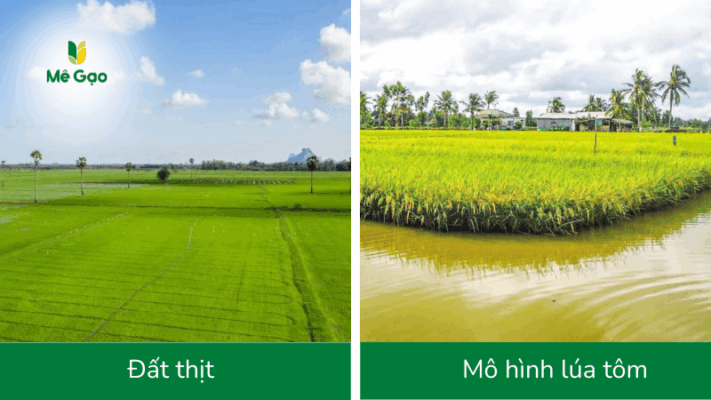
- Soil: Best suited to loam, riverside alluvial soil or the rice–shrimp model (rotational brackish-water areas). Soil pH should be adjusted to 5.5 – 6.5 so the rice roots can absorb organic nutrients most effectively.
2. Seed selection and soil preparation techniques
ST25 is a rice variety famous for its delicious grain quality, and it requires standard growing conditions to reach its full genetic potential. Soil preparation, seed selection and seed treatment are key factors that directly determine healthy growth and the final harvest yield.
- Thorough soil preparation: Plow and sun-dry the soil early to kill pathogens. For organic farming, a base application of well-rotted manure (composted with Trichoderma fungi) or microbial organic fertilizer at 5-10 tons/ha is mandatory to build humus.
- Seed selection: Use certified-grade (G1) ST25 seed rice with bright, plump grains.
- Seed treatment:
- Remove unfilled and diseased seeds: Soak the seeds in diluted salt water (about 10%) and skim off any that float.
- Stimulate germination: Soak in warm water at 54°C (3 parts boiling water to 2 parts cold water) for about 24-30 hours.
- Incubate the seeds: Rinse off the sour smell and incubate for 36-48 hours until the seeds sprout evenly (the “pigeon-breast” stage), then sow.
3. Sowing techniques & ideal density
Unlike conventional farming, organic ST25 rice needs “sparse sowing” so the plants are healthy and less prone to pests and diseases.
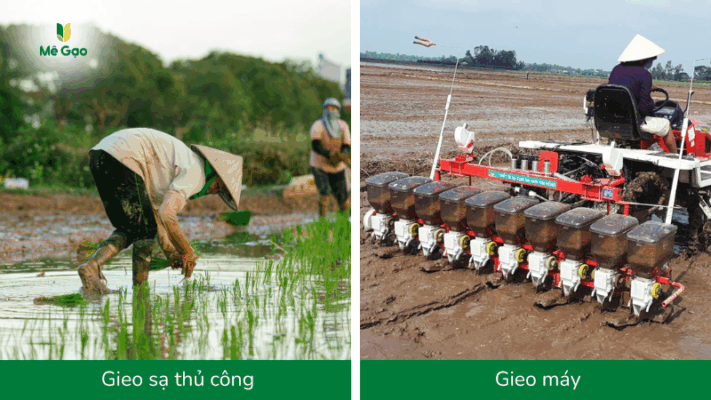
- Method: Machine transplanting or row seeding is recommended.
- Density:
- Row seeding/broadcasting: Use only 80 – 100 kg/ha. (Do not sow densely at 150 kg/ha as in traditional practice, because high density causes severe rice blast outbreaks.)
- Machine transplanting: Spacing of 30 cm x 12-14 cm. Sparse transplanting helps the rice plants tiller vigorously, with thick stems, long panicles and plenty of sunlight.
4. Organic care & fertilizing process (by stage)
To achieve a bumper crop with export-standard ST25 rice quality, farmers need to strictly follow a care schedule matched to the key growth stages of the rice plant.
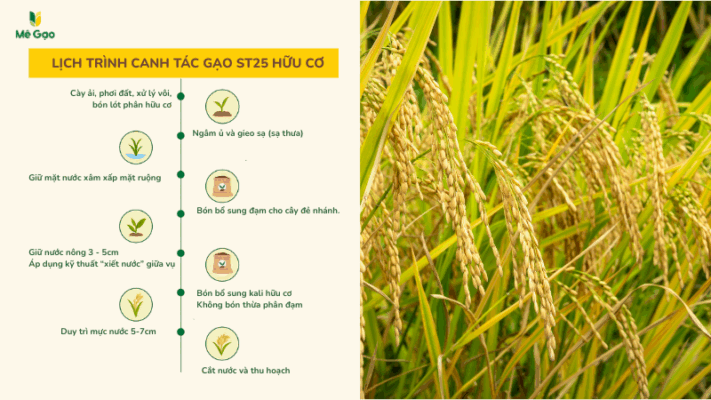
- Stage 1: Seedling & recovery (0-15 days after sowing/transplanting)
- Keep the water level just covering the field surface (1-3 cm).
- If the soil is acid sulfate soil, apply fused phosphate or lime as a base fertilizer to reduce acidity right at the start of the season.
- Stage 2: Tillering (16-35 days) – The stage that determines the number of panicles
- Nutrition: This is when the plants need (natural) nitrogen to tiller. Use nitrogen-rich organic fertilizers (such as fermented fish fertilizer or well-rotted chicken manure) or organic-mineral fertilizers with balanced nitrogen and phosphorus content.
- Water management: Keep the water shallow (3-5 cm) so the rice tillers quickly.
- The “field drainage” technique (mid-season): Once the rice has produced enough effective tillers (around 35-40 days), drain the water from the field (until the soil shows fine hairline cracks) for 5-7 days. Benefits: Encourages deep rooting, prevents lodging and detoxifies the soil.
- Stage 3: Panicle initiation & flowering (40-70 days)
- Nutrition: Switch to “grain-filling” mode. Add organic potassium (from kitchen ash, composted banana or specialized organic potassium fertilizer). Never apply excess nitrogen at this stage, to avoid leaf folders and neck blast.
- Water level: Let water back into the field (5-7 cm) for panicle development.
5. Integrated pest management (IPM) – No chemicals
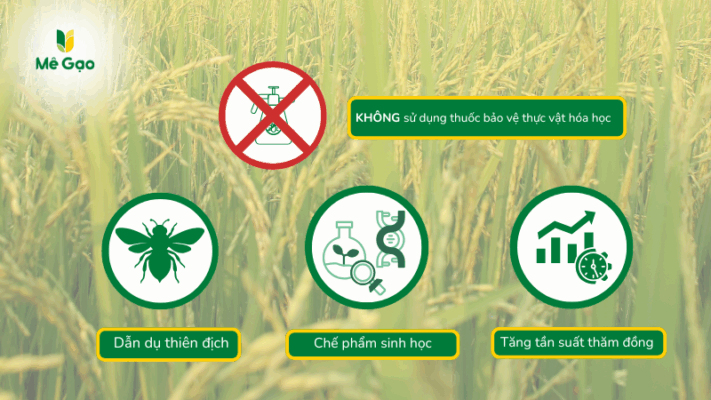
Organic ST25 farming uses absolutely no chemical pesticides. Instead, farmers use:
- Flowers along field banks: Attract natural enemies (parasitic wasps, spiders) to control brown planthoppers and leaf folders.
- Biological products: Use green and white muscardine fungi (Metarhizium, Beauveria) to parasitize planthoppers and pests. Use Pseudomonas microbial products to combat rice blast.
- Regular field visits: Detect outbreaks early for localized treatment.
6. Harvesting & storage to ST25 standards
- Timing: Harvest when 85-90% of the panicles are golden ripe (don’t let the rice become overripe, or the grains will break during milling).
- Drying: ST25 rice needs to be dried at a low temperature (<45°C), gradually reducing the moisture to 14-14.5%. Drying with the right technique keeps the grains from breaking (cracking) and preserves their natural pandan aroma longer.
Frequently Asked Questions (FAQ)
Is ST25 rice harder to grow than ordinary rice?
Yes, ST25 requires more intensive farming techniques. ST25 rice plants react strongly to fertilizer and weather; if too much nitrogen is applied, the plants lodge and become diseased very easily. That is why the organic process is the most sustainable solution for this variety.
Why does my ST25 rice have so many unfilled grains?
This is usually caused by unfavorable weather during flowering (too cold or too hot) or a lack of potassium/calcium during panicle initiation. Pay attention to the crop calendar so the rice flowers during favorable weather.
What is the average yield of organic ST25?
With an average yield of 5 – 6 tons/ha, organic rice output is significantly lower than that of conventional rice. This scarcity helps consumers understand why ST25 Rice is expensive. In return, a 30-50% higher purchase price is a well-deserved ‘reward’ that brings farmers sustainable profits.
Conclusion
Switching to an organic ST25 rice farming process is the inevitable path to sustainable development for farmers. With a standard process, you can plan your planting schedule, know how many months ST25 rice takes to grow, time the harvest precisely and understand where ST25 rice grows best for high quality, laying the foundation for stable production, outstanding profits and long-term environmental protection.
Need advice or want to try pure ST25 rice? Contact Mê Gạo now for support and quick ordering today.