 About Us
 News
 Store Locator
 Support
Where Does Japonica Rice Come From? Why Is It So Popular in Vietnam?

Where does Japonica Rice come from, and why is it becoming increasingly popular in Vietnam? With its round grains, soft and sticky texture, mild sweetness and rich nutrients, Japonica rice is not only famous in Japan but is also successfully grown in the Mekong Delta using modern technology.
This article will help you explore the origin of Japonica rice in detail, along with how much stickier and more fragrant it is than ordinary rice.
Characteristics and origin of Japonica rice
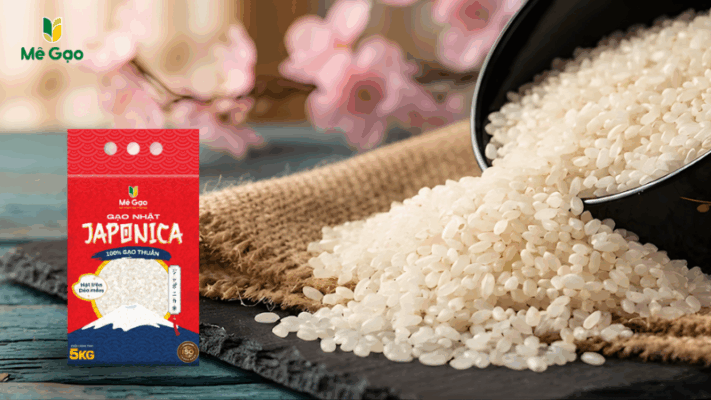
Japonica rice is a short-grain rice variety originating from Japan, a country known for its cool, temperate climate. This environment shaped its distinctive starch structure, which makes the grains highly sticky and cohesive once cooked.
Today, Japonica rice is grown not only in Japan but also successfully in Vietnam, especially in the Mekong Delta. Here, the Japonica rice variety is developed from pure Japanese seed stock, combined with:
- Modern farming technology
- A strict quality control process
- Suitable soil conditions
As a result, Japonica rice grown in Vietnam retains its high quality and authentic Japanese flavor while better meeting the needs of domestic consumers.
How to recognize it:
- Appearance: The grains are round, plump, uniform, rarely broken and bright white.
- Flavor and texture: When cooked, the rice is very sticky, soft, lightly fragrant and gently sweet. It is slightly chewy, with a distinctive aroma and mild sweetness.
- Notably, the rice stays soft and delicious even when cooled.
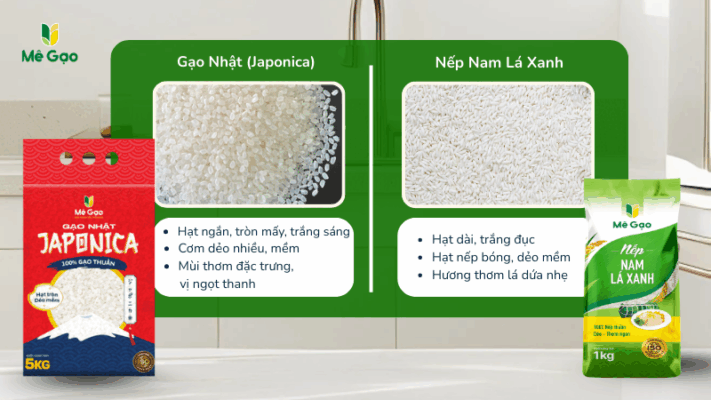
Detailed comparison of Japonica rice and Glutinous Rice
| Criteria | Japonica rice | Glutinous Rice |
| Grain shape | Short, round, plump, bright white | Long grains, opaque white |
| Stickiness | Very sticky, soft | Perfectly soft and sticky |
| Flavor | Distinctive aroma, mild sweetness | Gentle pandan aroma |
| After cooking | Soft, sticky and slightly chewy. Stays soft when cooled. | Glossy grains, moderately soft and sticky, never mushy. |
| Culinary uses | Sushi, rice balls, dishes that need high stickiness | Sticky rice (xoi), sweet soups (che), bamboo-tube rice (com lam), square sticky rice cake (banh chung), cylindrical sticky rice cake (banh tet) |
Why is Japonica rice so popular in Vietnam?
In recent years, Japonica rice has become increasingly popular with consumers in Vietnam. This popularity comes not only from culinary trends but also from its outstanding advantages in quality, nutrition and eating experience.
1. Outstanding nutritional value
Japonica rice not only makes for soft, fragrant meals but is also an abundant natural source of energy and minerals for the body. 100 g of Japonica rice provides:
| Nutrient | Amount |
| Energy | ≥ 347 kcal |
| Carbohydrate | ≥ 77.3 g |
| Protein | ≥ 8.0 g |
| Fat | ≥ 0.6 g |
| Sodium | ≥ 2.9 mg |
2. A great choice for babies starting solids and the elderly
Thanks to its very sticky, soft and easy-to-digest grains, Japonica rice is ideal for sensitive digestive systems. Babies starting solids can easily absorb its nutrients when moms follow how to cook Japonica rice porridge for babies to make a smooth, silky porridge. Meanwhile, the elderly also put less strain on their stomachs thanks to grains that stay soft and sticky even when cooled.
How to cook soft, sticky Japonica rice the authentic Japanese way
To make sure your cooked rice stays perfectly sticky and delicious, follow these steps:
- Rinsing: Rinse gently 2-3 times to clean the rice without losing the nutritious outer bran layer.
- Soaking: Soak in clean water for about 30 minutes. This step lets the grains absorb moisture and the amylopectin structure expand, so the rice achieves perfect stickiness.
- Measuring water: The standard ratio is usually 1 part rice : 1 – 1.2 parts water (you can adjust the amount of water to suit your taste).
- Resting: After the cooker switches to warm mode, let the rice rest for another 10-15 minutes so the grains absorb any excess water and cook through.
Where to buy genuine Japonica rice?
To buy high-quality Japonica rice, consumers should prioritize reputable suppliers that guarantee pure, unblended rice that meets food safety standards.
For your convenience, Mê Gạo’s distribution network is available at reputable retail outlets nationwide:
- In Hanoi: The product is available at Tmart and HomeFarm stores.
- In Ho Chi Minh City: You can buy it at KingFoodMart.
- Direct support: Call our hotline 0973 978 039 for detailed advice and to make sure you buy the genuine product.
- Online channels: Look for the official Mê Gạo store on e-commerce platforms such as Shopee and TikTok Shop for convenient shopping.
Mê Gạo Japanese Japonica rice meets the 100% pure rice standard: unblended, made from a single type of rice and grown from a pure rice variety. The product is delicious, clean and preservative-free, produced through a sustainable process, and holds the international FDA and HALAL certifications as well as domestic certifications such as HACCP and ISO 22000:2018.
Frequently Asked Questions (FAQ)
Is sushi rice Japonica rice?
Yes. Japonica rice is especially ideal for making sushi and other dishes that need high stickiness. Its sticky quality helps sushi rolls hold their shape precisely without the grains breaking apart.
Is Japonica rice glutinous rice?
No. Japonica is a non-glutinous rice variety. Although the cooked rice is stickier and softer than ordinary rice, its starch structure is still different from that of glutinous rice, making it suitable as a staple food for everyday meals.