
 About Us
 News
 Store Locator
 Support
Japonica Rice vs. Brown Rice: Which Should You Choose?

Japonica Rice and brown rice are two familiar types of rice, but they serve different nutritional purposes and eating habits. Japonica Rice stands out for its short, round grains that cook into soft, tender rice that is easy to eat and suits most families, while brown rice keeps its bran layer and therefore contains more fiber, vitamins and minerals.
This difference directly affects flavor, digestibility and health benefits such as weight or blood sugar control. If you are torn between the two, the article below compares the characteristics of both types of rice to help you choose the right product for your needs.
Japonica rice vs. brown rice comparison table
Below is a table comparing the core criteria of these two types of rice based on their actual characteristics:
| Criteria | Japanese Japonica Rice | Brown rice |
| Appearance | Short, plump, round, uniform grains that rarely break, bright white. | Whole grains, brown, red or black. |
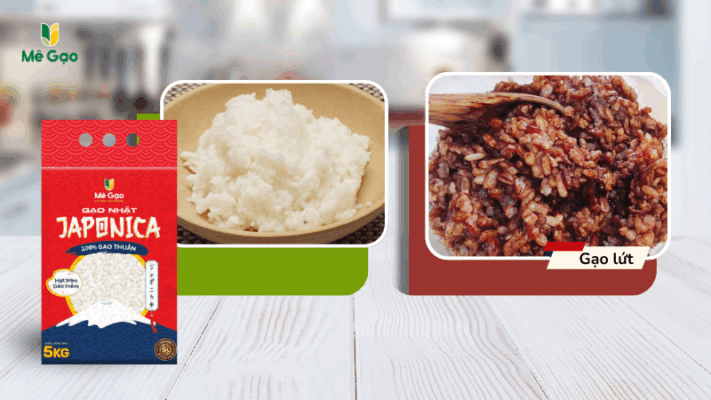
| Flavor & Texture | Very sticky, soft, lightly fragrant, mildly sweet. The rice stays soft and delicious even when cooled. | Nutty and rich. Usually harder and drier than white rice when cooked. |
| Key value | Provides steady carbohydrates and protein, easy to eat. | Rich in fiber, B vitamins (B1, B3, B6) and minerals. |
| Health benefits | Easy to digest, suitable for adults and young children. | Keeps you full longer, helps control blood sugar (low GI). |
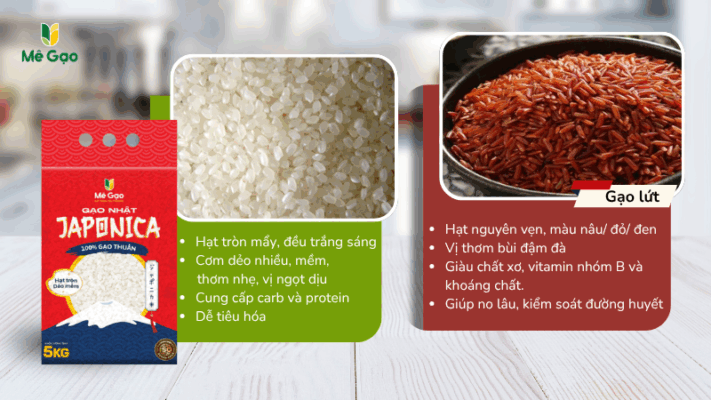
A detailed look at the differences between Japonica rice and brown rice
Nutritional value
-
Japonica rice provides steady energy with a high carbohydrate content, supporting daily activities and suiting everyday dietary needs. The nutritional value of Japonica rice stands out with about 347 kcal/100 g, along with protein and a small amount of fat, making it a balanced, easily absorbed source of nutrition that does not put much strain on the digestive system.
- Brown rice, on the other hand, keeps its bran and germ, so it has higher nutritional value, especially in fiber. This fiber slows the absorption of sugar and helps control blood sugar effectively. Brown rice also contains plenty of B vitamins such as B1, B3 and B6, along with minerals and antioxidants that help improve metabolism and support heart health. The core difference is that Japonica rice focuses on providing easily absorbed energy, while brown rice focuses on supplying micronutrients and supporting long-term health.
Flavor and eating experience
- Japonica rice: Offers premium quality with white, soft, sticky grains that have a slight chewiness, a distinctive aroma and a mild sweetness. Its biggest plus is that the rice stays soft and delicious even when cooled.
- Brown rice: Cooked brown rice has a rich, nutty, naturally fragrant flavor. However, keep in mind that brown rice is usually harder and drier than white rice when cooked.
Ease of cooking
-
Japonica rice has a big advantage in terms of convenience. You do not need much experience; simply knowing how to cook Japonica rice with the right water ratio gives you a pot of soft, tender rice, perfect for a busy lifestyle and everyday use.
-
Brown rice, meanwhile, requires a more complicated cooking process because of the hard bran layer surrounding each grain. To cook evenly, the rice usually needs to be soaked for several hours beforehand and cooked with a precisely controlled amount of water. If not prepared properly, the rice can turn out undercooked or too dry, spoiling the eating experience.
Japonica rice vs. brown rice: Which should you choose?
Choosing between Japonica Rice and brown rice depends on each person’s taste and eating habits. Each type of rice has its own advantages, so understanding your needs will help you make the most suitable and effective choice.
Choose brown rice when you prioritize health and nutrition control
- If your goal is to improve your overall health, brown rice is worth considering thanks to its high fiber content and low glycemic index.
- Because it keeps its bran layer, this rice helps control blood sugar, keeps you full longer and helps lower cholesterol. This is why brown rice is often chosen for diets, weight loss or for people with diabetes and heart-related conditions.
Choose Japonica Rice when you want great taste and easy digestion
- If you prioritize great taste and convenience in your daily meals, Japonica rice is the better choice.
- Being very sticky, soft and easy to digest, this rice suits many people, from young children to the elderly.
- In addition, the excellent binding ability of cooked Japonica rice makes it an ideal ingredient for dishes such as sushi, rice balls or other dishes that need a stable texture.
Conclusion
Choosing Japonica rice or brown rice depends on your family’s health goals and taste. If you love soft, very sticky rice that is gentle on the digestive system, Japanese Japonica Rice from Mê Gạo is a great choice.
With our commitment to Delicious – Clean – No preservatives, Mê Gạo brings peace of mind and satisfaction to every family meal.
Frequently Asked Questions (FAQ)
Can brown rice be used to make sushi, kimbap or rice balls?
You should not use brown rice, because the cooked grains are usually harder and drier than white rice, resulting in poor binding. For these dishes, Japonica Rice is the ideal choice for sushi and other dishes that require high stickiness.
Is Japonica rice more expensive than brown rice?
Japanese Japonica Rice – 100% pure, in a 5 kg bag, has a regular price of 180,000 VND and is currently on promotion for only 150,000 VND. You can easily buy the product at Tmart and HomeFarm stores in Hanoi and KingFoodMart in Ho Chi Minh City. You can also shop conveniently on Shopee and TikTok Shop, or contact our hotline 0973 978 039 directly for support.





